
Determining the Right Liability Limits for Your Trucking Business

Trucking companies face significant financial risks on the road every day. A single accident can result in millions of dollars in damages and legal costs.
We at Select Risk Insurance Group understand that choosing the right truck liability limits requires careful analysis of your specific business operations. The wrong coverage amount can either leave you financially exposed or waste money on unnecessary protection.
What Are Your Minimum Liability Requirements?
The Federal Motor Carrier Safety Administration sets non-negotiable minimum liability requirements that vary dramatically based on your cargo type and truck weight. Trucks over 10,001 pounds that carry non-hazardous materials need $750,000 in liability coverage, while hazardous material carriers must carry $1 million to $5 million (depending on the specific materials they transport). The FMCSA will not issue operating authority without proof of these minimum requirements, which makes compliance mandatory rather than optional.
Federal Minimums Represent Just the Starting Point
These federal minimums represent the absolute floor, not adequate protection for most operations. A single severe truck accident settlement averages between $70,000 and $105,000 according to National Highway Traffic Safety Administration data, but catastrophic cases can reach millions. A Maryland jury awarded nearly $8 million in one truck accident case, which demonstrates how quickly minimum coverage becomes insufficient. Lawsuits targeting trucking have increased at an exponential pace, seen in both the volume of cases and the size of verdict awards, which makes higher limits a business necessity rather than luxury.
How Primary vs Excess Coverage Structure Works
Primary liability coverage responds first to claims up to your policy limit, while excess coverage kicks in above the primary limit. Most trucking operations benefit from coverage structure with a $1 million primary policy and additional excess layers that total $4-9 million. This structure typically costs less than a single high-limit primary policy while it provides the same total protection. The MCS-90 endorsement that federal law requires provides broader coverage than standard policies and protects victims even when certain policy exclusions might otherwise apply.
State Requirements Add Another Layer of Complexity
Individual states impose additional requirements beyond federal minimums that can significantly impact your coverage needs. Some states require higher liability limits for specific cargo types or mandate additional coverage for environmental cleanup after hazardous material spills. Interstate carriers must comply with the highest requirements of any state they operate in, while intrastate carriers focus on their home state regulations. Louisiana requires $300,000 liability for trucks under 10,000 pounds, but these limits prove inadequate when accidents involve multiple vehicles or serious injuries.
What Drives Your Liability Needs Higher
Your cargo type directly determines your baseline liability requirements and exposure levels. Trucking companies that transport hazardous materials face mandatory $5 million liability limits for cargo tanks with capacity greater than 3,500 water gallons due to environmental cleanup costs that can reach tens of millions after spills. The Environmental Protection Agency reports that the average hazmat spill cleanup costs $240,000, but major incidents like chemical releases can exceed $50 million in total damages.
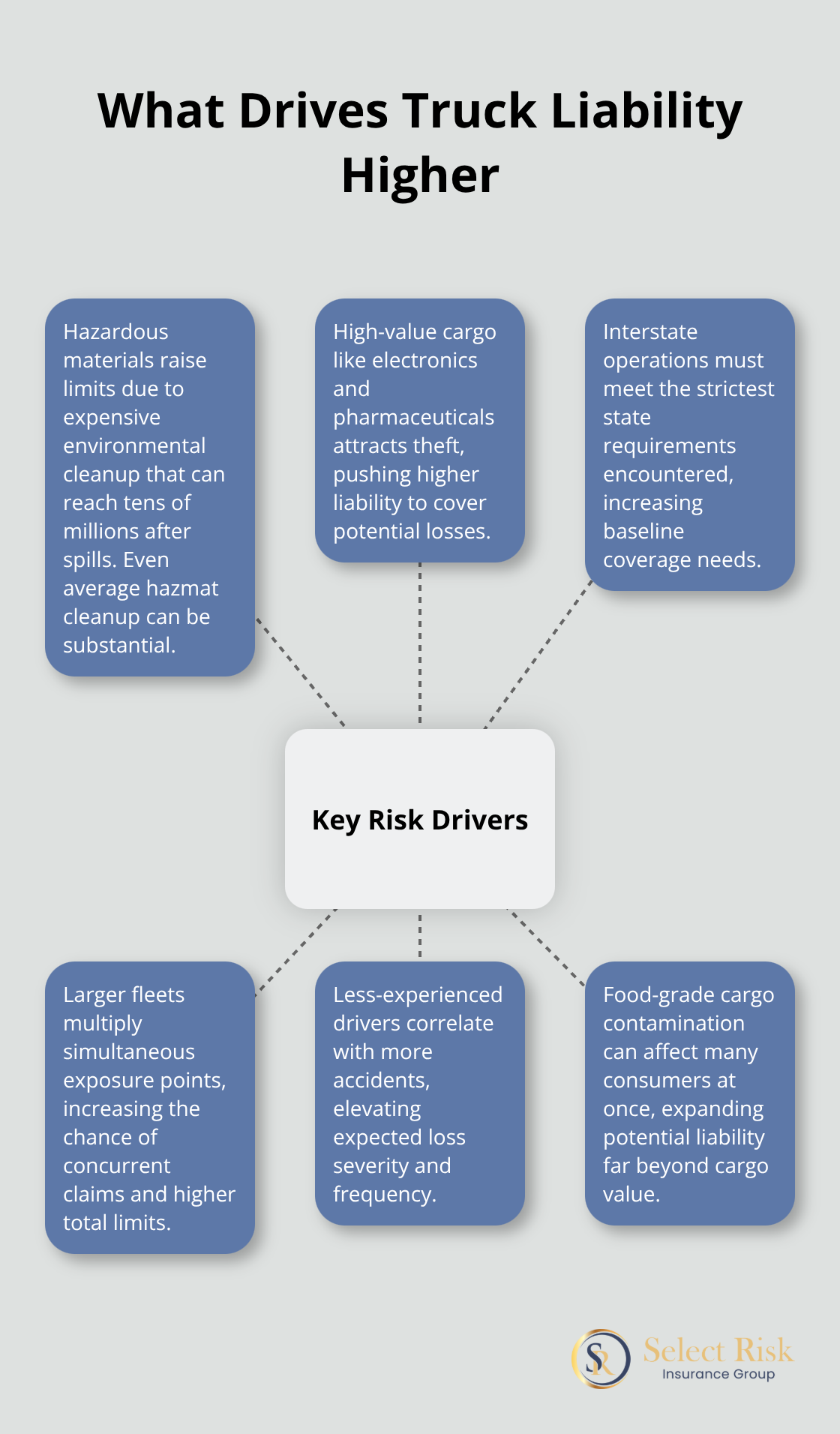
Companies that haul electronics, pharmaceuticals, or high-value manufactured goods need higher limits because cargo theft claims average $142,000 per incident (based on CargoNet statistics). Food-grade haulers face additional liability from contamination lawsuits that can affect hundreds of consumers simultaneously.
Interstate Operations Multiply Your Risk Exposure
Interstate carriers face liability laws from multiple states and must carry coverage that meets the highest requirement in any state they operate. Texas requires $1 million minimum for trucks over 80,000 pounds, while California mandates environmental coverage for certain cargo types that can add $2-3 million to your liability needs. Fleet size amplifies these requirements exponentially because multiple trucks create multiple simultaneous exposure points.
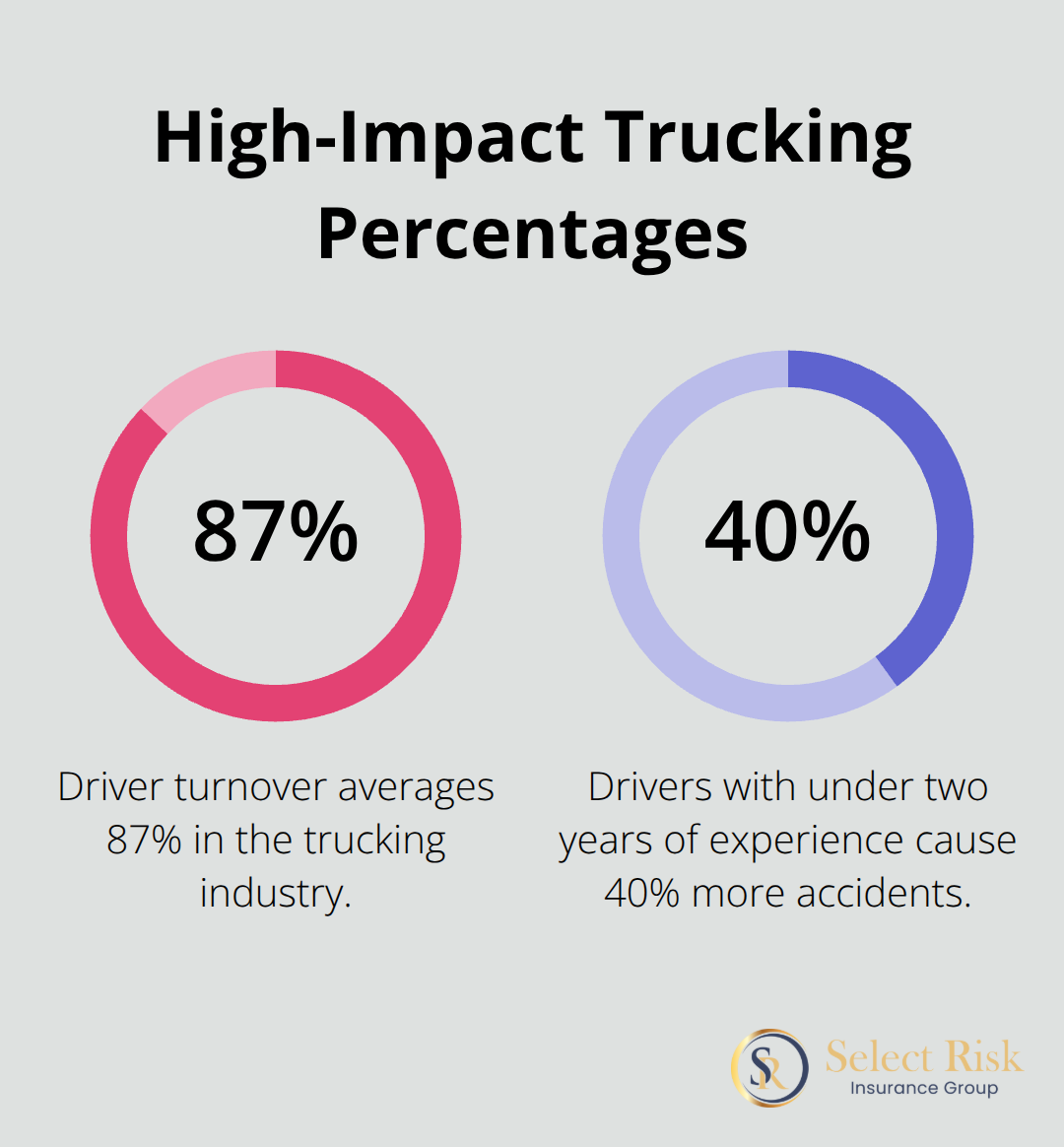
Companies with fleets over 25 trucks should carry $10-15 million in total liability limits because the probability of concurrent accidents increases dramatically with more vehicles on the road. Driver experience levels directly correlate with accident frequency, as drivers with less than two years experience cause 40% more accidents than veteran drivers according to Federal Motor Carrier Safety Administration crash data.
Large Fleets Need Umbrella Protection
Companies that operate more than 50 trucks face aggregate liability exposures that can quickly exhaust standard coverage limits. A single multi-vehicle accident that involves your fleet can trigger multiple $1 million claims simultaneously, which makes umbrella coverage above $25 million standard practice for large operations. Driver turnover rates that average 87% in the industry mean constant training of inexperienced operators who statistically cause more severe accidents during their first 18 months behind the wheel.
These risk factors work together to determine your minimum liability needs, but the calculation process requires a systematic approach to assess your maximum potential loss exposure.
How Much Coverage Do You Actually Need?
Calculate your maximum potential loss exposure by adding your worst-case accident scenario costs together. A catastrophic multi-vehicle accident that involves fatalities can generate substantial damages when you factor in wrongful death settlements, medical expenses, property damage, and legal defense costs. Fatal truck crashes involve significant costs, but cases that involve multiple deaths or permanent disabilities can reach into the millions. Add cargo value, environmental cleanup costs for hazmat spills, and business interruption expenses to reach your true maximum exposure.
Calculate Your Asset Protection Requirements
Your business assets determine how much protection you need beyond basic liability requirements. Companies with substantial equipment, real estate, and cash reserves should carry liability limits that exceed their total asset value to account for future income and growth potential. Insufficient coverage creates significant financial risk for trucking companies.
Calculate your annual revenue, multiply by three years, and add your total business assets to establish your minimum coverage floor. Major shippers like Walmart, Amazon, and Home Depot require their carriers to maintain $2-5 million in liability coverage as a condition of business, which makes higher limits a competitive necessity rather than optional protection.

Industry Standards Set Your Baseline
Successful companies typically carry 3-5 times the federal minimum requirements to meet shipper demands and protect against nuclear verdicts. Companies that haul general freight maintain $2-3 million in total liability coverage, while hazmat carriers require $10-15 million due to environmental cleanup exposure (which can reach tens of millions after major spills).
Adequately insured carriers experience better financial outcomes from accidents and maintain better safety ratings that reduce insurance premiums over time. Your coverage calculation must account for inflation in medical costs and legal settlements, which have increased significantly in recent years.
High-Value Cargo Creates Additional Exposure
Companies that haul electronics, pharmaceuticals, or high-value manufactured goods need higher limits because cargo theft creates substantial financial exposure. Food-grade haulers face additional liability from contamination lawsuits that can affect hundreds of consumers simultaneously, which creates exposure far beyond the cargo’s actual value.
Independent truckers operating without trailers need bobtail insurance to cover liability gaps when driving between loads or returning home after deliveries.
Final Thoughts
Truckers must evaluate their cargo types, fleet size, and total business assets to determine optimal truck liability limits. Start with your maximum potential loss exposure, then add three years of annual revenue to establish your coverage floor. Companies that transport hazardous materials need $10-15 million in coverage due to environmental cleanup costs (which can reach tens of millions after major spills), while general freight carriers typically maintain $2-3 million to meet shipper requirements.
Your liability needs change as your business grows, which makes annual coverage reviews essential. Fleet expansion, new cargo types, and interstate operations all increase your exposure levels significantly. Driver experience improvements and safety technology investments can reduce premiums while they maintain adequate protection.
Experienced commercial insurance agents who understand federal regulations save time and money while they prevent coverage gaps. We at Select Risk Insurance Group work with multiple insurance companies to find competitive rates for comprehensive coverage that matches your specific operational risks. Our agents help you navigate complex liability requirements and adapt your coverage as your business evolves.