
Top Considerations for Louisiana Truckers Seeking Insurance
Louisiana truckers face unique challenges when it comes to insurance. The Pelican State’s regulations, combined with federal requirements, create a complex landscape for trucking businesses.
At Select Risk Insurance Group, we understand the importance of comprehensive coverage tailored to your specific needs. This guide will explore the top considerations for Louisiana truckers seeking insurance, helping you navigate the intricacies of protection in this dynamic industry.
What Insurance Do Louisiana Truckers Need?
State-Mandated Minimum Coverage
Louisiana law requires all commercial vehicles to carry minimum liability coverage. Trucks weighing less than 10,000 pounds must have $300,000 in combined single limit coverage. This requirement increases to $1,000,000 for trucks that transport oil and weigh 10,000 pounds or more.
Federal Requirements for Interstate Carriers
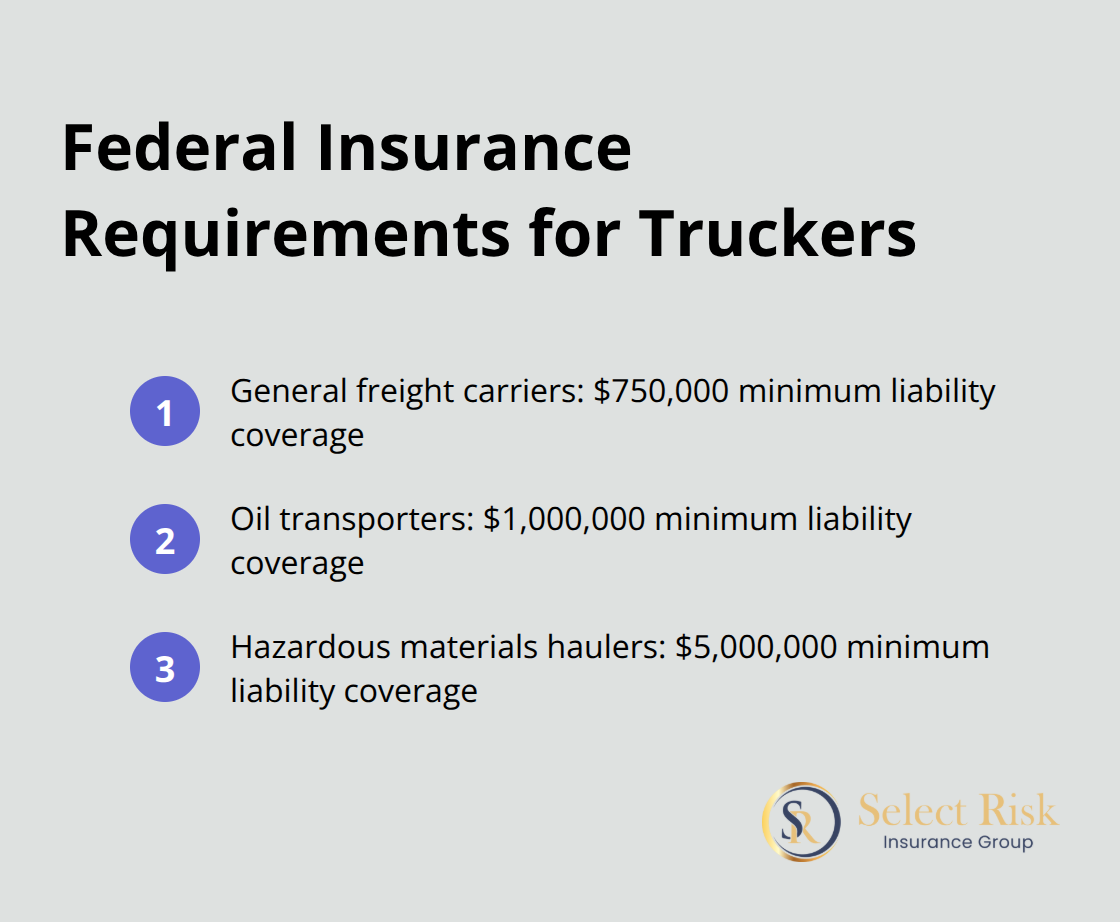
The Federal Motor Carrier Safety Administration (FMCSA) sets insurance standards for truckers crossing state lines. General freight carriers must maintain at least $750,000 in liability coverage. Oil transporters need $1 million, while hazardous materials haulers require $5 million. (These are minimum requirements; many shippers and brokers often demand higher limits.)
Louisiana-Specific Insurance Considerations
Louisiana’s unique geography and climate create additional risks for truckers. The state’s susceptibility to hurricanes and flooding makes comprehensive physical damage coverage a necessity, not just a recommendation. Many truckers in the state opt for higher limits on their cargo insurance, particularly when transporting valuable or perishable goods through flood-prone areas.
Essential Coverage Beyond Basic Requirements
Liability coverage forms the foundation of trucking insurance, but it’s only the beginning. Non-trucking liability insurance (also known as bobtail insurance) protects owner-operators when they’re not under dispatch, such as during personal errands.
Workers’ compensation is another critical component, especially given Louisiana’s strict labor laws. Even solo operators may need to carry workers’ comp on themselves to meet certain contract requirements.
Tailoring Your Insurance Package
A one-size-fits-all approach doesn’t work for trucking insurance in Louisiana. Your specific risks, cargo types, and routes should inform your insurance strategy. (For example, a trucker hauling seafood from the Gulf Coast will have different needs than one transporting lumber from northern Louisiana.)
The right insurance package can significantly impact a trucking operation’s success in Louisiana. It’s not just about meeting minimums; it’s about creating a comprehensive strategy that truly protects your business on and off the road.
As we move forward, let’s examine the factors that influence trucking insurance premiums in Louisiana, helping you understand how to potentially lower your costs while maintaining robust coverage.
What Drives Trucking Insurance Costs in Louisiana?
Driver Experience and Safety Record
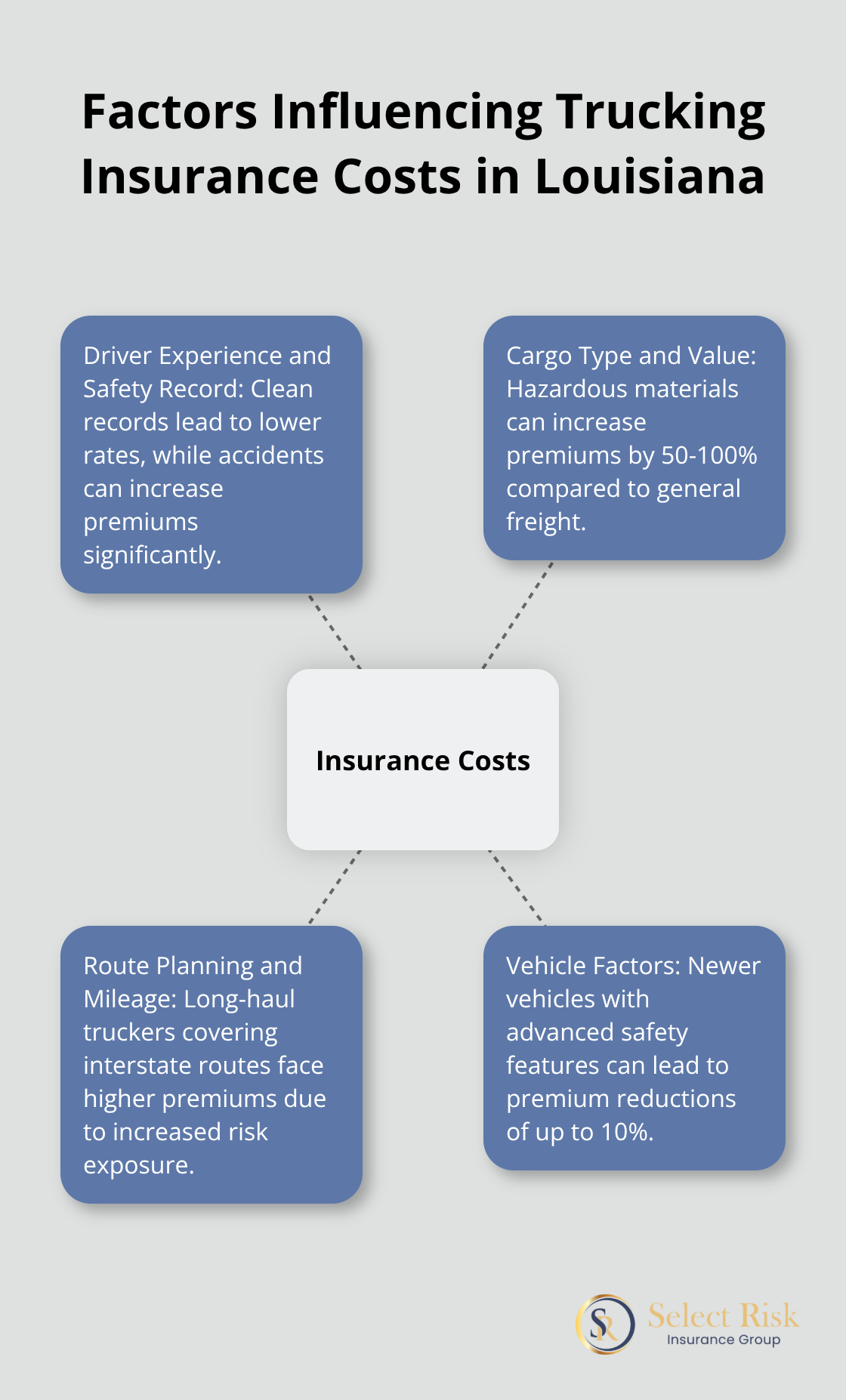
Insurance premiums for truckers in Louisiana depend heavily on driving records. A clean record shows you are a responsible and low-risk driver. In addition to lower rates, you may also qualify for other discounts or perks.
Accidents or violations can dramatically increase premiums. A single at-fault accident could raise rates significantly, while multiple incidents might make coverage difficult to obtain. This highlights the need for ongoing safety training and strict adherence to traffic laws.
Cargo Type and Value
The nature and worth of transported cargo significantly affect insurance costs. Hazardous materials require higher coverage limits and can increase premiums by 50-100% compared to general freight. Even non-hazardous goods like electronics or pharmaceuticals may necessitate additional cargo insurance, potentially adding 10-15% to overall insurance costs.
Route Planning and Mileage
Operational radius and annual mileage play key roles in premium calculations. Long-haul truckers covering interstate routes face higher premiums due to increased risk exposure. A trucker primarily operating within Louisiana might pay 20-30% less than one regularly crossing state lines.
Urban routes, particularly in high-traffic areas like New Orleans or Baton Rouge, can also increase costs. Some insurers charge up to 15% more for predominantly urban operations due to the higher likelihood of accidents in congested areas.
Vehicle Factors
The characteristics of your truck fleet directly influence insurance rates. Newer vehicles with advanced safety features can lead to premium reductions of up to 10%. Regular maintenance proves essential; well-maintained trucks are less likely to cause accidents due to mechanical failures.
Specialized equipment, such as refrigerated units or flatbeds, may require additional coverage, potentially increasing premiums by 5-15%. However, these costs often balance out with the higher rates charged for specialized transport services.
As we explore these factors, it becomes clear that strategic decisions can positively impact your insurance costs. The next section will guide you through choosing the right coverage for your Louisiana trucking business, ensuring you have comprehensive protection tailored to your specific needs.
What Coverage Do Louisiana Truckers Need?
General Liability Insurance
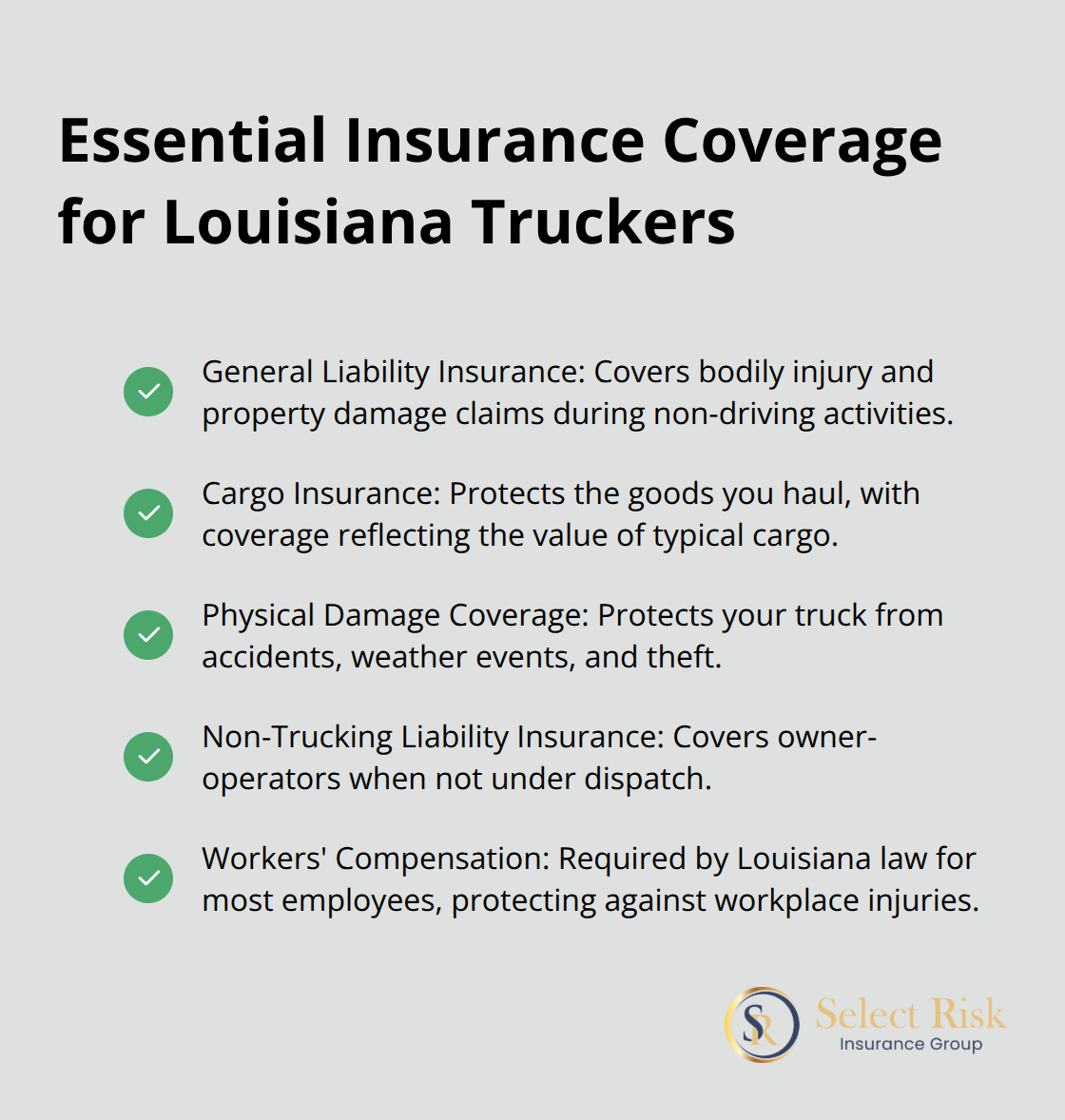
General liability insurance forms the backbone of your trucking business protection. It covers bodily injury and property damage claims that occur during non-driving activities, such as loading and unloading cargo. In Louisiana’s challenging legal climate, robust general liability coverage is essential. We recommend a minimum of $300,000 in coverage for trucks operating in interstate or foreign commerce, weighing less than 10,000 pounds, and carrying non-hazardous cargo.
Cargo Insurance
Louisiana’s diverse economy requires truckers to transport a wide range of goods (from seafood to oil equipment). Cargo insurance protects the goods you haul. Your coverage amount should reflect the value of the cargo you typically transport. For high-value items like electronics, you might need $250,000 or more in coverage. Consider additional endorsements for refrigerated goods if you transport perishables from Louisiana’s coastal areas.
Physical Damage Coverage
Louisiana’s unpredictable weather, including hurricanes and flooding, poses significant risks. Physical damage coverage protects your truck from accidents, weather events, and theft. Truckers without this coverage can face financial ruin after a severe storm. Try to include comprehensive coverage for non-collision events, which is particularly important in Louisiana’s climate.
Non-Trucking Liability Insurance
Non-trucking liability insurance (also known as bobtail insurance) is essential for owner-operators when they’re not under dispatch. It fills the gap when your truck is used for personal reasons or when you drive home after completing a job. In Louisiana, where many truckers live far from their routes, this coverage is particularly important. We suggest limits that match your primary liability coverage.
Workers’ Compensation
Louisiana law requires workers’ compensation coverage for most employees. Even solo operators may need to carry this insurance on themselves to meet certain contract requirements. The cost varies based on your payroll and the specific risks associated with your operations. Proper workers’ comp coverage can protect you from potentially bankrupting lawsuits and ensure your employees’ protection.
Choosing the right insurance coverage requires careful consideration of your specific needs and risks. The cheapest option isn’t always the best – it’s about finding the right balance between coverage and cost to ensure your Louisiana trucking business stays on the road and profitable for years to come.
Final Thoughts
Louisiana truckers face unique challenges in the complex world of trucking insurance. State-specific regulations and unpredictable Gulf Coast weather create a landscape that demands careful consideration and expert guidance. The right insurance coverage protects your business and livelihood, going beyond mere legal requirements.
Your insurance needs will evolve as your business grows or changes focus. We recommend you assess your specific risks, including cargo types, typical routes, and equipment value. A knowledgeable insurance professional who understands Louisiana’s trucking industry can help you navigate these complexities.
At Select Risk Insurance Group, we offer tailored insurance solutions for Louisiana truckers. Our team understands local regulations and industry-specific risks (allowing us to find the best coverage for your unique situation). With the right coverage and a trusted advisor, you can confidently hit the road, knowing your business is protected against potential challenges.