
Effective Risk Management Strategies for Trucking Companies

Trucking companies face mounting pressures from rising insurance costs, stricter regulations, and increased liability exposure. The average commercial trucking claim now exceeds $185,000, making proactive risk management non-negotiable.
At Select Risk Insurance Group, we’ve seen how comprehensive trucking risk management strategies can reduce claims by up to 40% while improving operational efficiency.
How Do You Build a Safety-First Driver Program
Strong driver screening eliminates potential safety risks before drivers enter your fleet. The Federal Motor Carrier Safety Administration provides crash statistics through their annual Large Truck and Bus Crash Facts report, which contains descriptive statistics about fatal, injury, and property-damage-only crashes. Motor vehicle records must span seven years, not the standard three, plus verification of employment history with previous carriers. Drug and alcohol testing must include hair follicle analysis alongside standard urinalysis (catching substance abuse patterns that urine tests miss). Background checks should flag any moving violations, criminal history, or previous DOT violations.
Monthly Training Sessions Cut Accident Rates
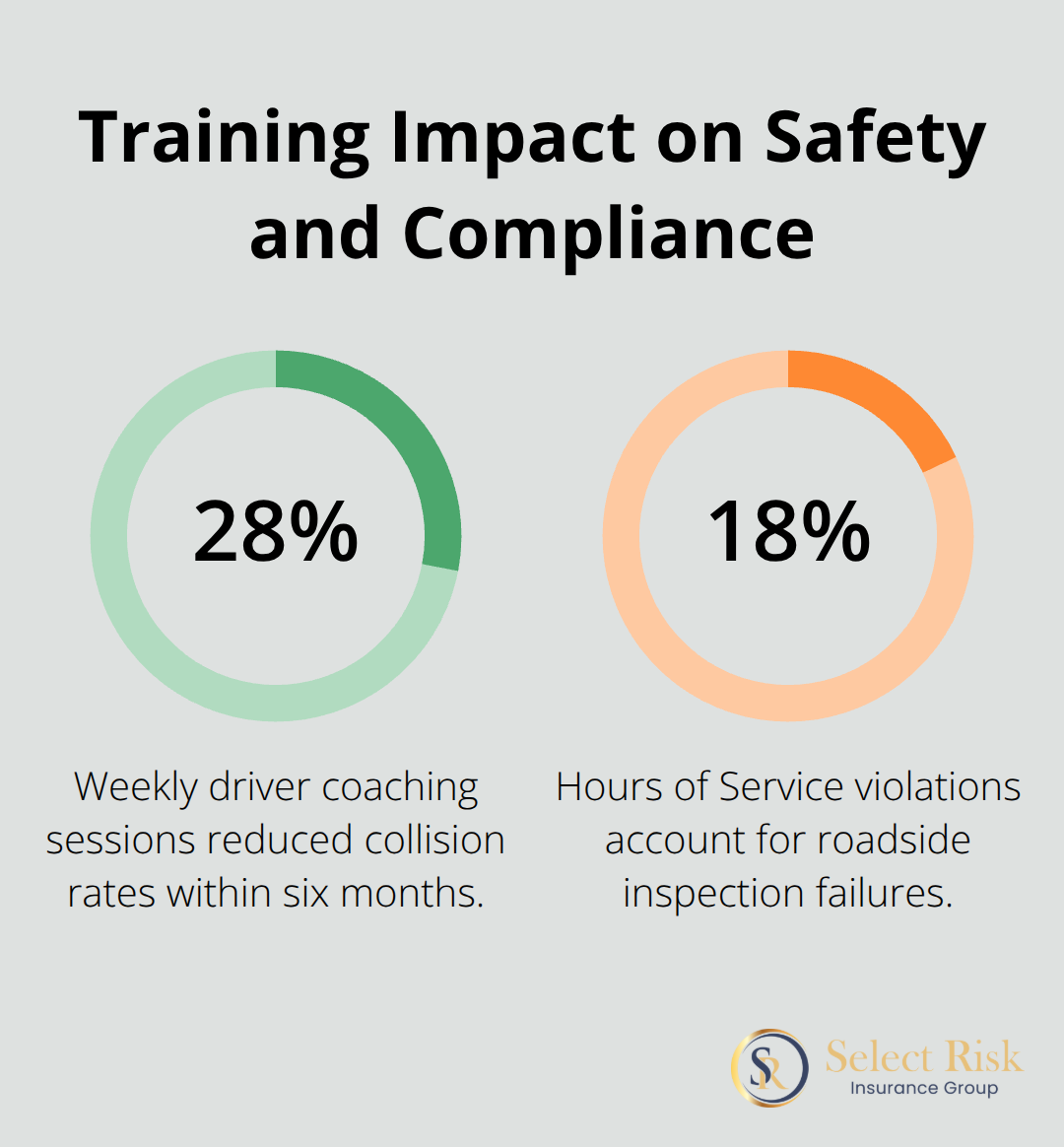
Monthly safety meetings cut accident rates dramatically compared to annual training sessions. The National Highway Traffic Safety Administration found that fleets conducting weekly driver coaching sessions reduced collision rates by 28% within six months. Hands-on defensive driving courses every quarter focus on backing techniques, intersection navigation, and hazardous weather conditions. Electronic logging device training prevents Hours of Service violations, which account for 18% of roadside inspection failures. Cargo securement certification must be renewed every six months, not annually, because improper load handling causes $50 billion in damages yearly.
Real-Time Performance Monitoring Prevents Problems
Telematics systems track harsh braking, rapid acceleration, and speeding incidents in real-time, allowing immediate driver coaching. Companies using advanced fleet management technology see 25% fewer insurance claims within the first year of implementation. Weekly scorecards monitor driver performance through fuel efficiency, on-time delivery rates, and safety metrics. Drivers scoring below 85% receive mandatory retraining within 48 hours. GPS tracking combined with dash cameras provides concrete evidence for coaching sessions and protects against fraudulent accident claims.
Driver Health and Wellness Programs
Physical fitness directly impacts driver safety and performance on the road. The Department of Transportation requires medical examinations every two years, but proactive companies conduct annual health screenings. Sleep apnea affects 28% of commercial drivers and increases crash risk by 250% (making regular sleep studies essential for high-risk drivers). Wellness programs that include exercise incentives and nutrition counseling reduce workers’ compensation claims by 15%. Mental health support through employee assistance programs helps drivers manage stress and fatigue that contribute to accidents.
Your driver safety program sets the foundation, but protecting your investment requires equally rigorous attention to vehicle maintenance and fleet management systems.
How Do You Maintain Fleet Reliability
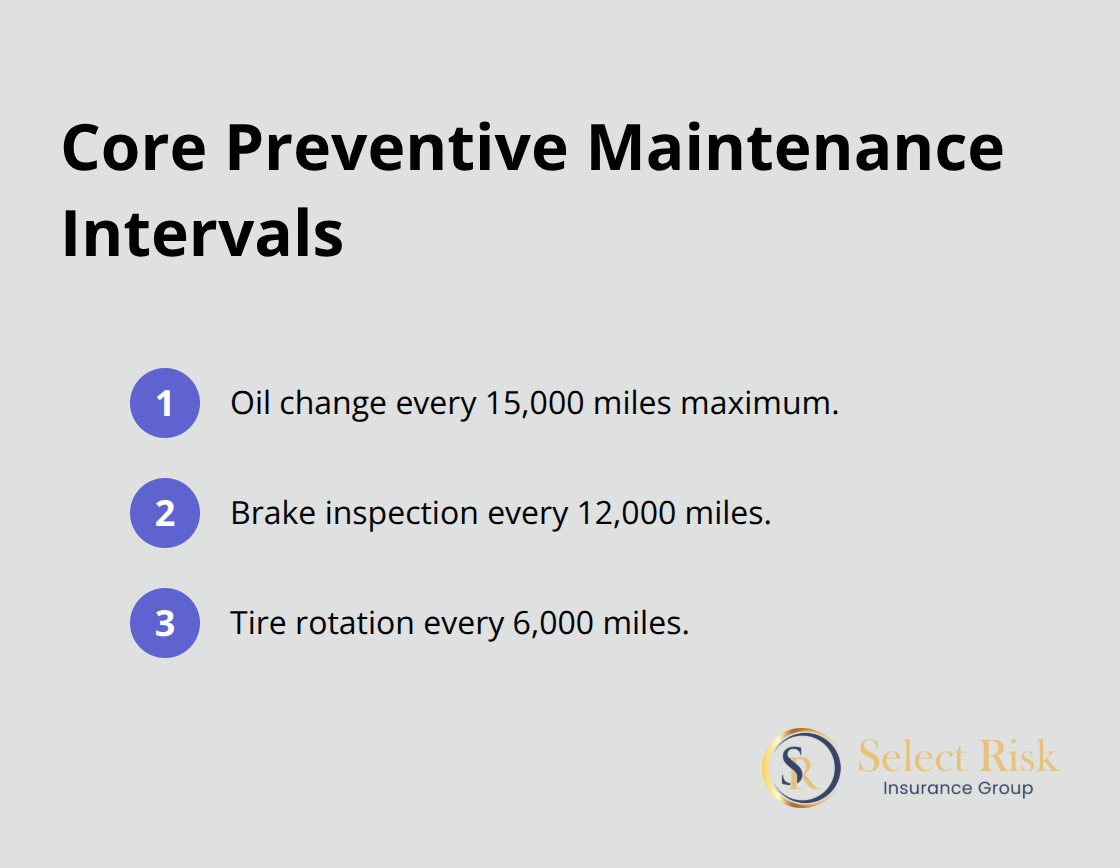
Scheduled maintenance intervals based on mileage, engine hours, and calendar time prevent 85% of roadside breakdowns according to the American Trucking Associations. Preventive maintenance schedules must track oil changes every 15,000 miles maximum, brake inspections every 12,000 miles, and tire rotations every 6,000 miles. Documentation requirements include maintenance records for three years minimum, with digital systems that provide instant access during DOT audits.
Fleet managers who implement weekly pre-trip inspection checklists reduce mechanical failures by 60% compared to daily-only inspections. Engine diagnostics through onboard computers identify problems before they cause expensive breakdowns, with fault codes that trigger automatic maintenance alerts.
Advanced Fleet Technology Reduces Operating Costs
Electronic devices paired with GPS systems provide real-time location data and Hours of Service compliance monitoring (reducing violation rates by 45%). Telematics platforms track fuel consumption, idle time, and route efficiency, with top-performing fleets that achieve 12% fuel savings within six months. Predictive maintenance technology analyzes engine performance data to schedule repairs before failures occur, cutting unplanned downtime by 35%. Dash cameras with driver-facing and road-facing views reduce insurance claims by 23% while they provide training opportunities through recorded incidents. Fleet management software integrates maintenance schedules, driver performance, and compliance tracking into single dashboards that save managers eight hours weekly on administrative tasks.
DOT Compliance Prevents Costly Violations
Annual DOT inspections require pass rates above 85% to avoid Compliance, Safety, Accountability program penalties that increase insurance premiums by 40%. Roadside inspection preparation includes daily vehicle inspection reports, current registration and insurance documentation, and driver qualification files. You should establish backup systems for all electronic records since power outages or system failures during audits create unnecessary delays and frustration. Out-of-service violations for brake defects account for 32% of all violations (making quarterly brake system inspections mandatory rather than recommended). Hours of Service compliance through electronic devices synchronizes with vehicle engines to automatically record driving time for easier, more accurate hours of service recording, but drivers need monthly training on ELD operation procedures. Commercial Driver License medical certification must be updated in the FMCSA clearinghouse within 30 days of renewal to prevent license downgrades that bench drivers immediately.
Vehicle maintenance protects your fleet investment, but comprehensive insurance coverage shields your business from financial catastrophe when accidents occur despite your best prevention efforts. Fleet discounts represent significant opportunities, with insurers offering 10% to 25% reductions for companies that operate three or more vehicles.
What Insurance Coverage Protects Your Trucking Business
Commercial auto liability insurance starts at $750,000 minimum coverage, but smart operators carry $1 million limits since the Federal Motor Carrier Safety Administration requires higher amounts for hazardous materials transport.
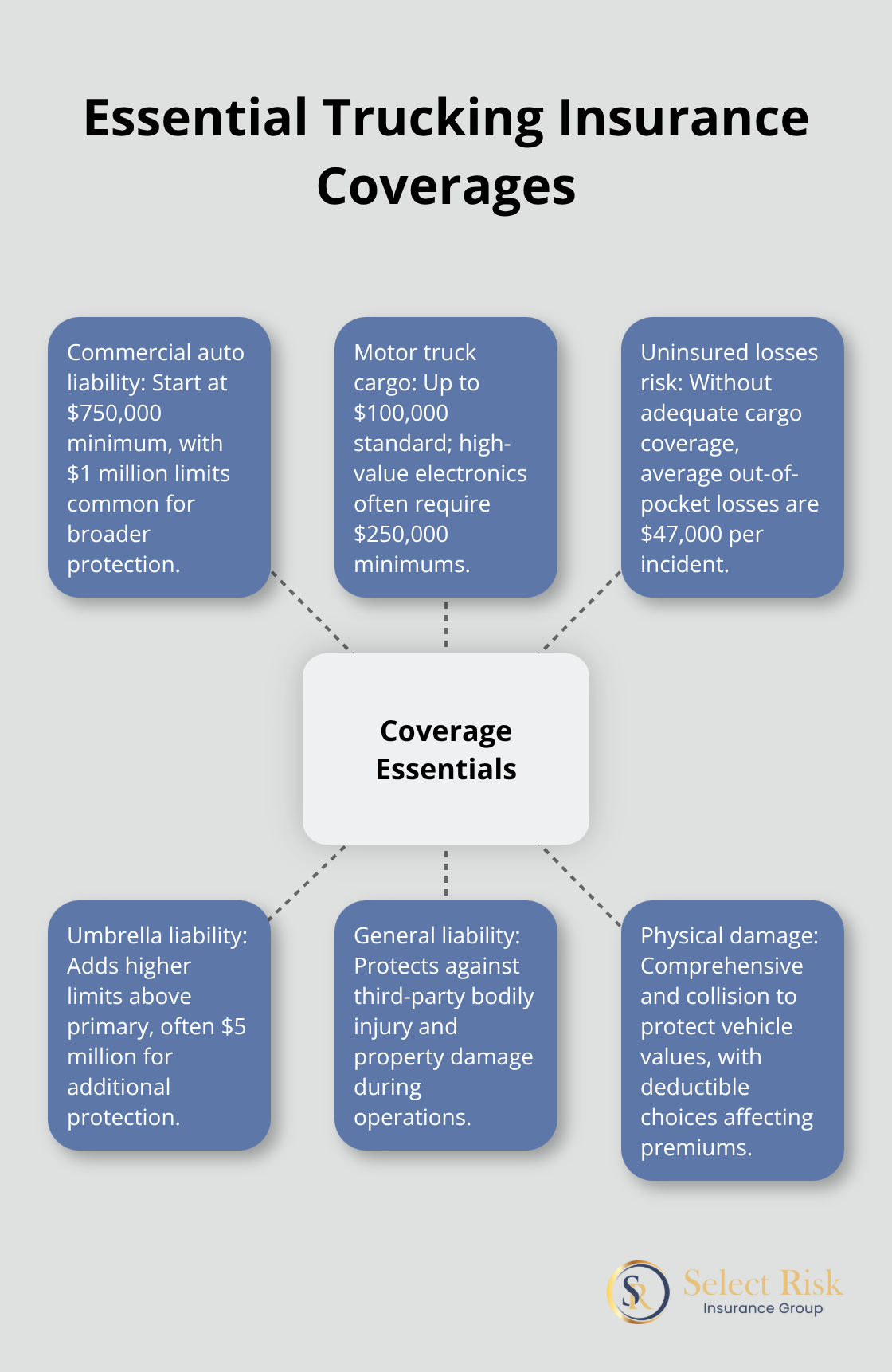
Motor truck cargo insurance protects freight values up to $100,000 per occurrence, though high-value electronics shipments demand $250,000 coverage minimums. The National Association of Insurance Commissioners reports that companies without adequate cargo coverage face average out-of-pocket losses of $47,000 per incident when client goods suffer damage or theft during transit.
Workers Compensation and General Liability Requirements
Louisiana workers compensation rates for operations average $8.50 per $100 of payroll, while neighboring Texas averages $12.20 according to the National Council on Compensation Insurance. General liability coverage protects against third-party bodily injury and property damage claims that occur during operations, with $2 million aggregate limits becoming standard for companies that handle multiple client locations. Umbrella policies provide additional protection above primary limits (with $5 million coverage that costs approximately $2,400 annually for clean-record operators). Physical damage coverage through comprehensive and collision policies protects vehicle values, but deductibles of $2,500 reduce premiums by 35% compared to $1,000 deductibles.
Claims Response Determines Settlement Outcomes
Immediate accident reports within two hours reduce claim costs by 22% compared to next-day notifications, according to the Insurance Information Institute. Driver statements must focus on facts without fault admission, while photographs of all vehicle damage, road conditions, and traffic signs provide essential evidence for defense attorneys. Claims adjusters respond faster to companies that maintain organized driver qualification files, current vehicle inspections, and electronic device records readily available for review. Post-accident drug tests within eight hours prevent drivers from challenge of positive results (while immediate vehicle inspections preserve mechanical evidence before repairs begin). Settlement negotiations favor companies with documented safety programs, regular records, and clean DOT compliance histories that demonstrate commitment to risk reduction.
Final Thoughts
Trucking risk management demands three fundamental pillars: rigorous driver programs, systematic fleet maintenance, and comprehensive insurance protection. Companies that implement all three strategies simultaneously reduce claims by 40% while they improve operational efficiency. The Federal Motor Carrier Safety Administration data shows that proactive risk management directly correlates with lower violation rates and reduced insurance premiums.
The financial impact extends beyond claim reduction. Fleets with structured risk management programs achieve 25% lower insurance costs, 35% less unplanned downtime, and 28% fewer collision rates (with measurable bottom-line results that justify initial investment in safety technology and training programs). These improvements translate to substantial cost savings that strengthen your competitive position in the market.
Implementation starts with driver screening and monthly safety training, followed by preventive maintenance schedules and telematics integration. Insurance coverage evaluation should occur quarterly to match evolving operational needs. We at Select Risk Insurance Group help Louisiana trucking companies develop comprehensive risk management strategies that protect both assets and profitability through personalized insurance solutions.