Why Roadside Assistance is Crucial for Louisiana Truckers

Louisiana’s highways present unique risks that can strand commercial vehicles for hours or even days. Hurricane season, remote rural routes, and extreme humidity create perfect storms for breakdowns.
We at Select Risk Insurance Group know that trucker roadside assistance isn’t just convenient-it’s business protection. When your rig breaks down 50 miles from nowhere, every minute costs money.
What Makes Louisiana Roads So Dangerous for Truckers
Louisiana’s trucking environment creates a perfect storm of operational nightmares that can destroy your business overnight. Hurricane season delivers sustained winds that exceed 74 mph and storm surges that shut down major freight corridors for weeks, not hours. The Federal Emergency Management Agency reports that Louisiana experiences an average of 2.3 major hurricanes per decade, with each storm that potentially closes I-10, I-12, and I-49 simultaneously. When Hurricane Ida struck in 2021, it caused significant supply chain disruptions and delays of 48-72 hours for freight shipments, which stranded hundreds of commercial vehicles and cost trucking companies millions in delayed deliveries.
Remote Routes Without Safety Nets
Louisiana’s rural highways stretch for hundreds of miles through sparsely populated areas where cell phone coverage vanishes and the nearest mechanic shop sits 150 miles away. State Route 82 in Cameron Parish and Highway 15 through Concordia Parish represent trucking dead zones where a blown tire or engine failure means you wait hours for help. The Louisiana Department of Transportation maintains only 16,500 miles of state highways across 64 parishes (leaving vast stretches of rural routes with minimal emergency services). Truckers who haul agricultural products from rice fields in Acadia Parish or timber from forests in Vernon Parish face isolation that turns minor mechanical issues into multi-day disasters.
Humidity Destroys Equipment Faster
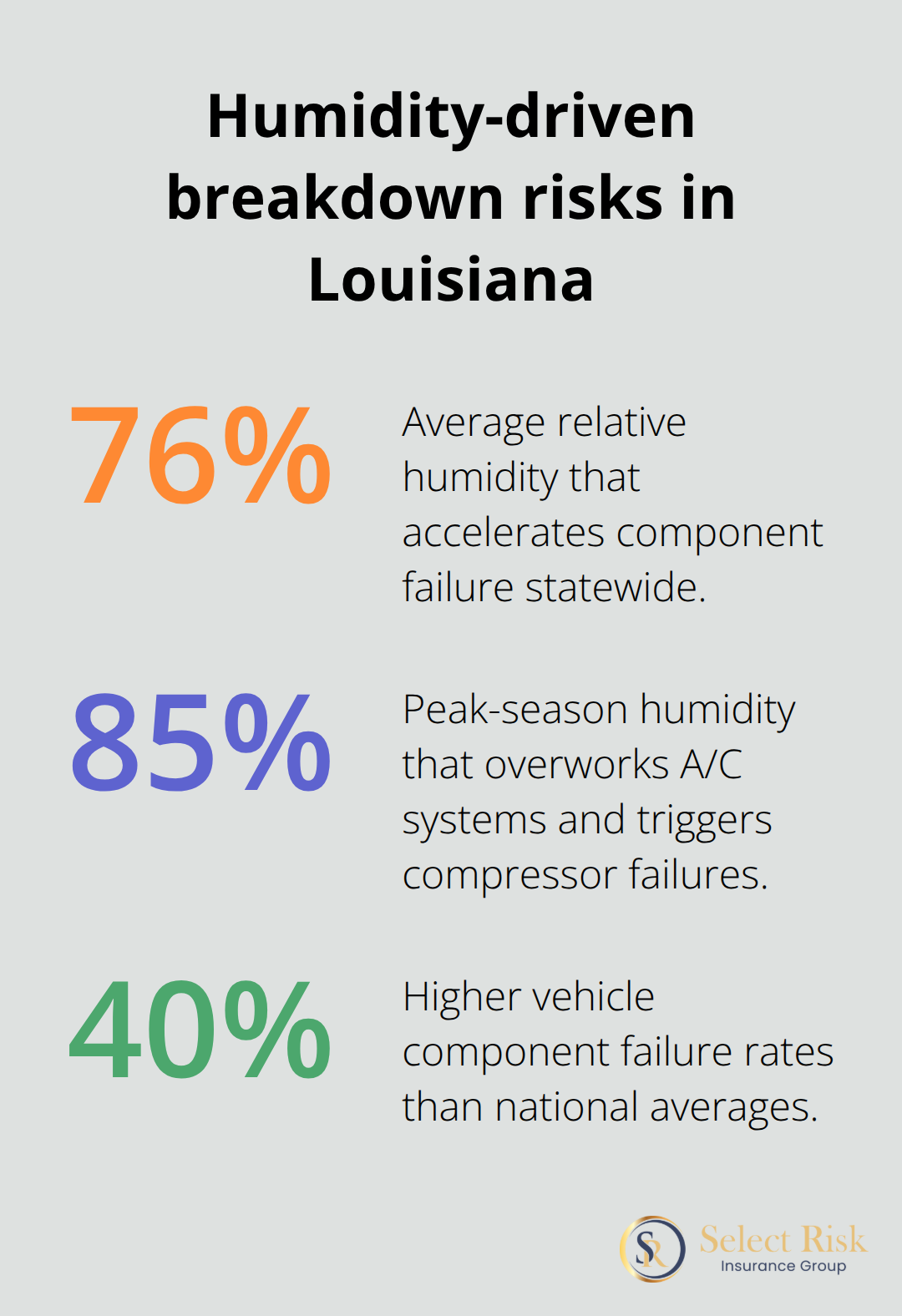
Louisiana’s average relative humidity of 76 percent accelerates vehicle component failure at rates 40 percent higher than national averages. Air conditioners work overtime in 95-degree heat with 85 percent humidity, which causes compressor failures that sideline trucks during peak seasons. Electrical systems corrode faster in coastal areas where salt air combines with extreme moisture, and this leads to unexpected breakdowns that standard maintenance schedules miss completely.
These harsh conditions make reliable roadside assistance more than just a convenience-they transform it into a business necessity that can save your operation thousands of dollars.
How Much Money Does Roadside Assistance Actually Save
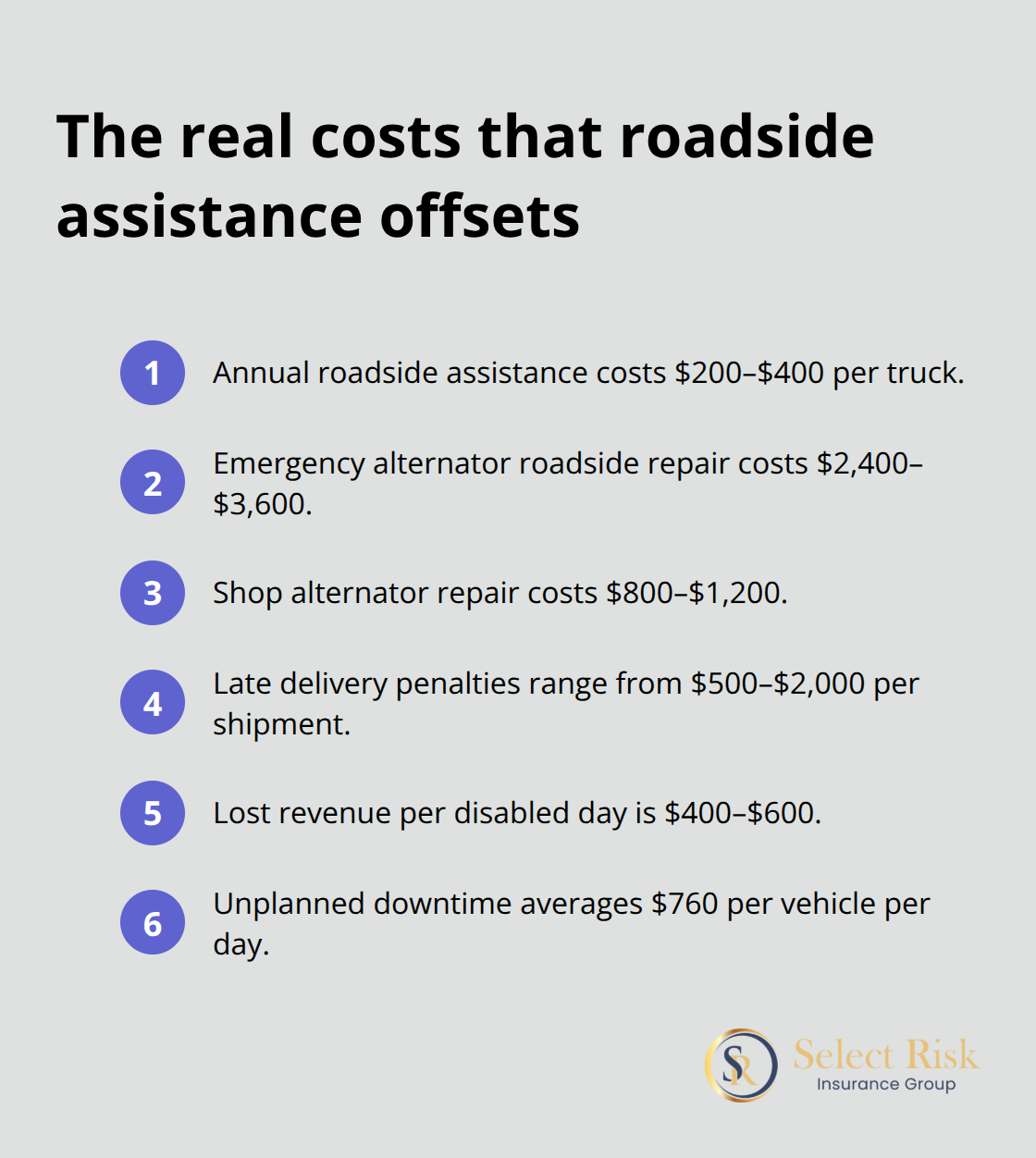
Roadside assistance transforms potential financial disasters into manageable business expenses that protect your bottom line. When your truck breaks down on I-10 between Baton Rouge and Lafayette, emergency towing costs can reach thousands of dollars for heavy-duty commercial vehicles, while comprehensive roadside assistance coverage typically costs $200-400 annually per truck. The math becomes even more compelling when you factor in missed delivery penalties that range from $500-2,000 per late shipment (depending on your contract terms).
Emergency Repairs Cost 300% More Than Planned Maintenance
Roadside emergency repairs command premium prices that can destroy your profit margins overnight. A standard alternator replacement at your regular shop costs $800-1,200, but the same repair performed roadside during off-hours jumps to $2,400-3,600 due to emergency service fees and technician travel time. Louisiana’s Motorist Assistance Patrol assists 150-200 motorists weekly, but their services focus on passenger vehicles and leave commercial truckers dependent on expensive private emergency services. Consolidated Truck Parts & Service offers 24/7 emergency assistance along I-49 and I-20, but their emergency rates reflect the premium nature of after-hours commercial repairs.
Customer Contracts Include Harsh Late Delivery Penalties
Major contracts impose financial penalties that escalate rapidly with each missed delivery window. Walmart’s transportation requirements include penalties that start at $500 for deliveries 1-2 hours late and escalate to $2,000 for delays that exceed 24 hours. Amazon’s freight partner agreements contain similar penalty structures that can eliminate your profit margin on entire loads. Quality roadside assistance prevents these penalties and reduces average breakdown resolution time from 8-12 hours to 2-4 hours, which keeps your delivery schedule intact.
Lost Revenue Compounds Daily
Each day your truck sits disabled costs you $400-600 in lost revenue potential (based on average daily gross earnings for owner-operators). A three-day breakdown during peak season can cost $1,800 in lost income, plus the original repair costs and delivery penalties. The Federal Motor Carrier Safety Administration reports that unplanned downtime costs trucking companies an average of $760 per day per vehicle, which makes the annual cost of roadside assistance coverage look minimal compared to a single major breakdown.
The right roadside assistance program becomes your financial safety net, but not all coverage options provide equal protection for commercial operations.
What Roadside Assistance Coverage Actually Works
Your roadside assistance policy becomes worthless when it excludes the exact scenarios that destroy Louisiana operations. Most standard coverage caps at 10,000-pound vehicles, which leaves Class 8 trucks that weigh 80,000 pounds completely unprotected during breakdowns. Commercial-grade coverage must specify heavy-duty capacity that handles fully loaded tractor-trailers, not just pickup trucks or delivery vans.
Weight Limits Exclude Most Commercial Trucks
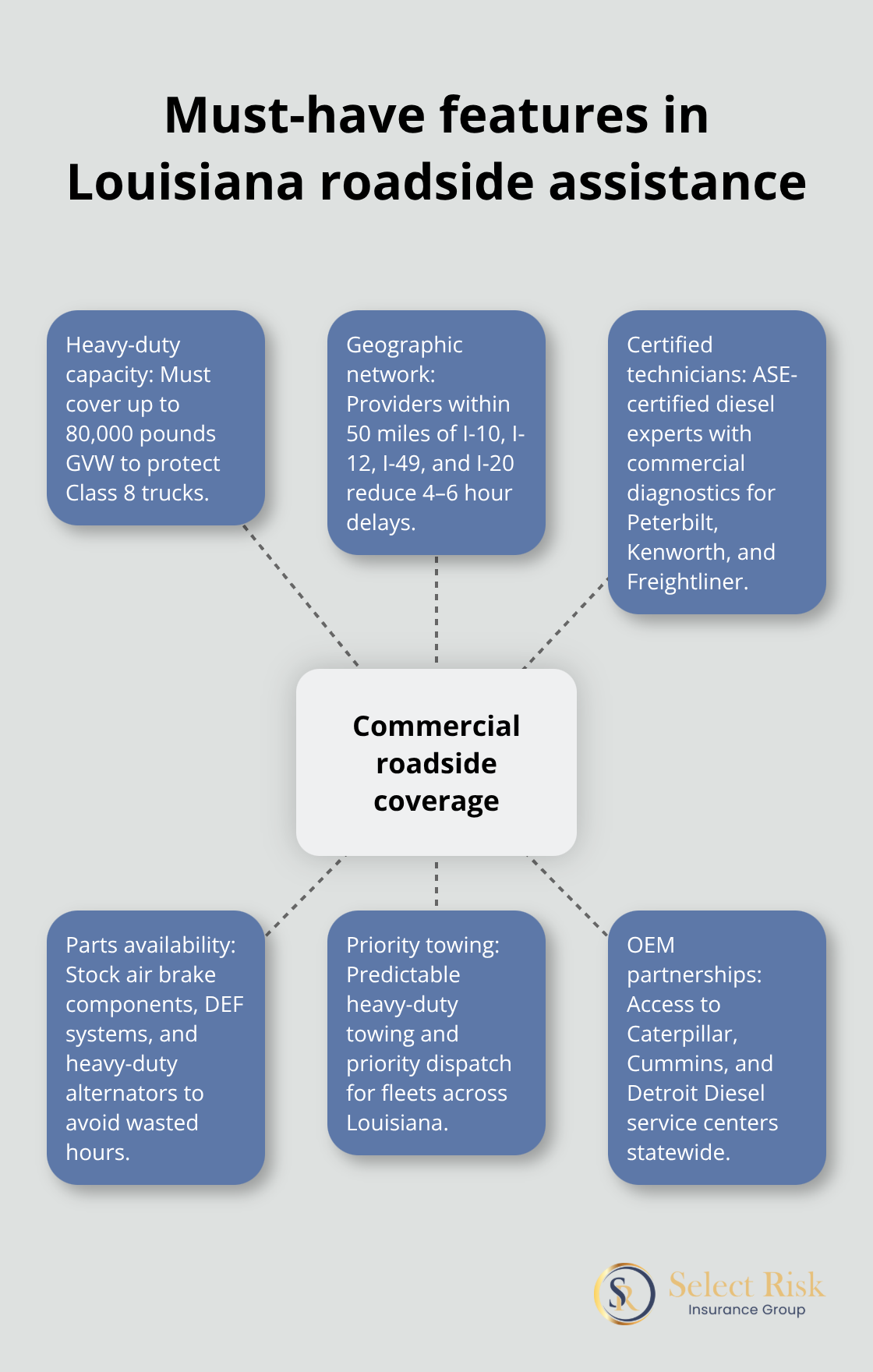
Standard roadside assistance policies cover passenger vehicles and light commercial trucks but abandon heavy-duty operations when breakdowns occur. Your policy must explicitly state coverage for vehicles up to 80,000 pounds gross vehicle weight to protect fully loaded commercial operations. Many providers advertise commercial coverage but limit actual service to trucks under 26,000 pounds, which excludes Class 7 and Class 8 vehicles that generate the majority of freight revenue.
Geographic Coverage Determines Response Speed
Louisiana’s 64 parishes contain vast rural stretches where response times stretch beyond 4-6 hours without proper network coverage. Effective roadside assistance requires pre-positioned service providers within 50 miles of major freight corridors that include I-10, I-12, I-49, and I-20. Companies like Consolidated Truck Parts & Service operate along specific routes from Lafayette to Shreveport, but gaps exist throughout southwestern and northeastern Louisiana where response times can exceed 8 hours.
Qualified Technicians Handle Complex Repairs
Generic roadside assistance sends automotive technicians who lack commercial vehicle expertise and diesel engine certifications that Class 8 repairs require. Professional coverage requires ASE-certified heavy-duty technicians who carry diagnostic equipment capable of reading commercial engine codes and performing complex electrical repairs on Peterbilt, Kenworth, and Freightliner systems. The technician network must stock common commercial parts that include air brake components, DEF systems, and heavy-duty alternators rather than passenger car parts that waste hours during emergency situations.
Service Network Availability Matters Most
Your provider must maintain relationships with Caterpillar, Cummins, and Detroit Diesel service centers throughout Louisiana for major engine repairs that exceed roadside capabilities. Verify that coverage includes helicopter transport for critical parts to remote locations, plus response times that match your delivery schedule requirements rather than vague best-effort promises (which protect the provider more than your business). The best policies provide coverage for towing with predictable costs and priority dispatch for fleets.
Final Thoughts
Trucker roadside assistance separates manageable business expenses from catastrophic financial losses that destroy operations overnight. Louisiana’s harsh environment makes this coverage mandatory for serious commercial operations. The numbers prove this point: annual coverage costs $200-400 per truck while emergency repairs command 300% premium rates that reach $3,600 for basic alternator replacements.
Late delivery penalties escalate to $2,000 per missed shipment, and unplanned downtime costs $760 daily according to Federal Motor Carrier Safety Administration data. A single three-day breakdown during peak season generates $1,800 in lost revenue plus repair costs and contract penalties. Hurricane season disruptions, remote rural routes, and extreme humidity create breakdown scenarios that standard coverage cannot handle effectively.
We at Select Risk Insurance Group provide personalized insurance solutions through partnerships with financially sound carriers. Select Risk Insurance Group offers competitive rates on commercial coverage that protects your operation. The time to secure proper roadside assistance coverage is before your next breakdown strands you on Highway 15 in Concordia Parish at 2 AM (when help becomes scarce and expensive).