Food Truck Commercial Auto Insurance: What You Need
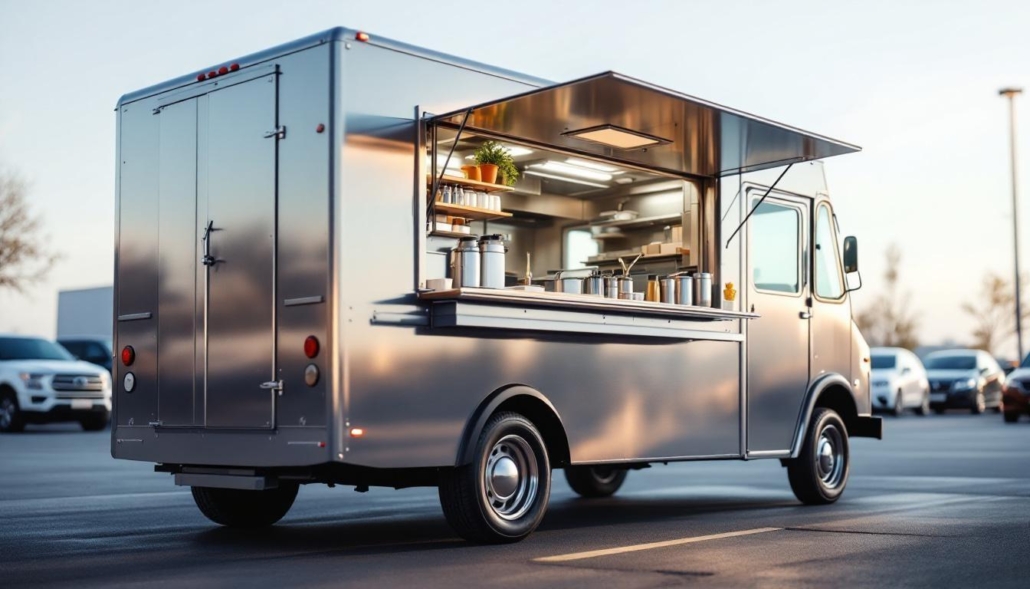
Food trucks face unique insurance challenges that traditional restaurants never encounter. Your mobile business needs specialized commercial auto insurance for food truck operations to protect against road risks and business liabilities.
We at Select Risk Insurance Group see operators struggle with complex coverage requirements daily. Understanding these insurance essentials protects your investment and keeps your business rolling.
Understanding Food Truck Commercial Auto Insurance Requirements
Louisiana Commercial Auto Insurance Mandates
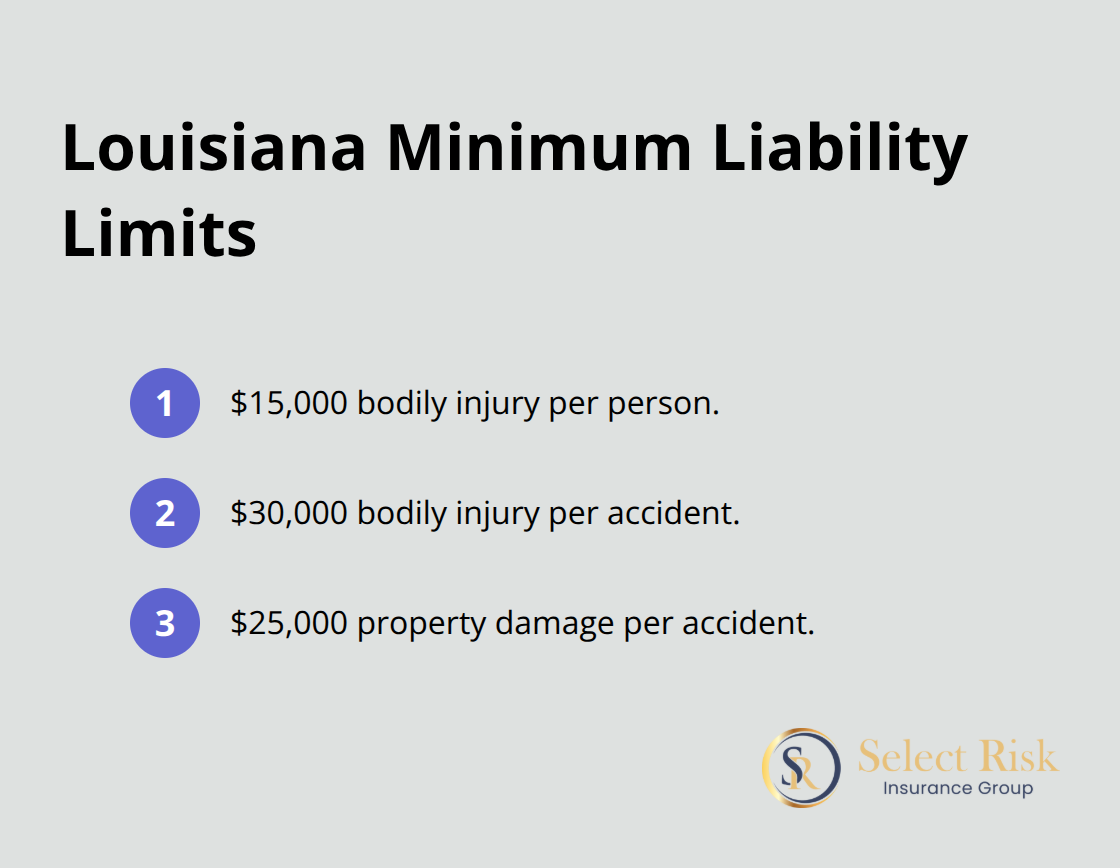
Louisiana requires all commercial vehicles, including food trucks, to carry minimum liability coverage of $15,000 per person for bodily injury, $30,000 per accident for total bodily injury, and $25,000 for property damage. Food trucks that operate across state lines must meet federal Department of Transportation requirements, which mandate $750,000 in liability coverage for vehicles that weigh over 10,001 pounds. Most food trucks fall into this category due to their equipment weight, which makes this federal minimum your actual requirement.
Federal DOT Compliance for Mobile Food Operations
The Federal Motor Carrier Safety Administration requires food trucks that cross state lines to obtain a DOT number and maintain commercial auto insurance that meets interstate commerce standards. Your truck needs $1 million in liability coverage if you transport passengers for hire or carry hazardous materials (which includes propane tanks common in food truck operations). Interstate food truck operators must also carry cargo insurance that covers the value of transported goods and equipment. These federal requirements override state minimums, so Louisiana’s lower limits become irrelevant for most serious food truck operations.
Coverage Recommendations Beyond State Minimums
We recommend $1 million in liability coverage regardless of your operation size. The average slip-and-fall claim costs $6,271 according to Insurance Canopy data, and a serious accident can easily exceed Louisiana’s minimum requirements. Add uninsured motorist coverage at $100,000 per person since Louisiana has one of the highest uninsured driver rates at 13.4 percent. Physical damage coverage that protects your vehicle and permanently attached equipment should match your truck’s replacement value, typically $50,000 to $150,000 for most food truck setups.
These baseline requirements form just the foundation of your food truck insurance needs. Your mobile business faces additional risks that standard commercial auto policies don’t address, which makes specialized coverage types essential for complete protection.
Essential Coverage Types for Food Truck Operations
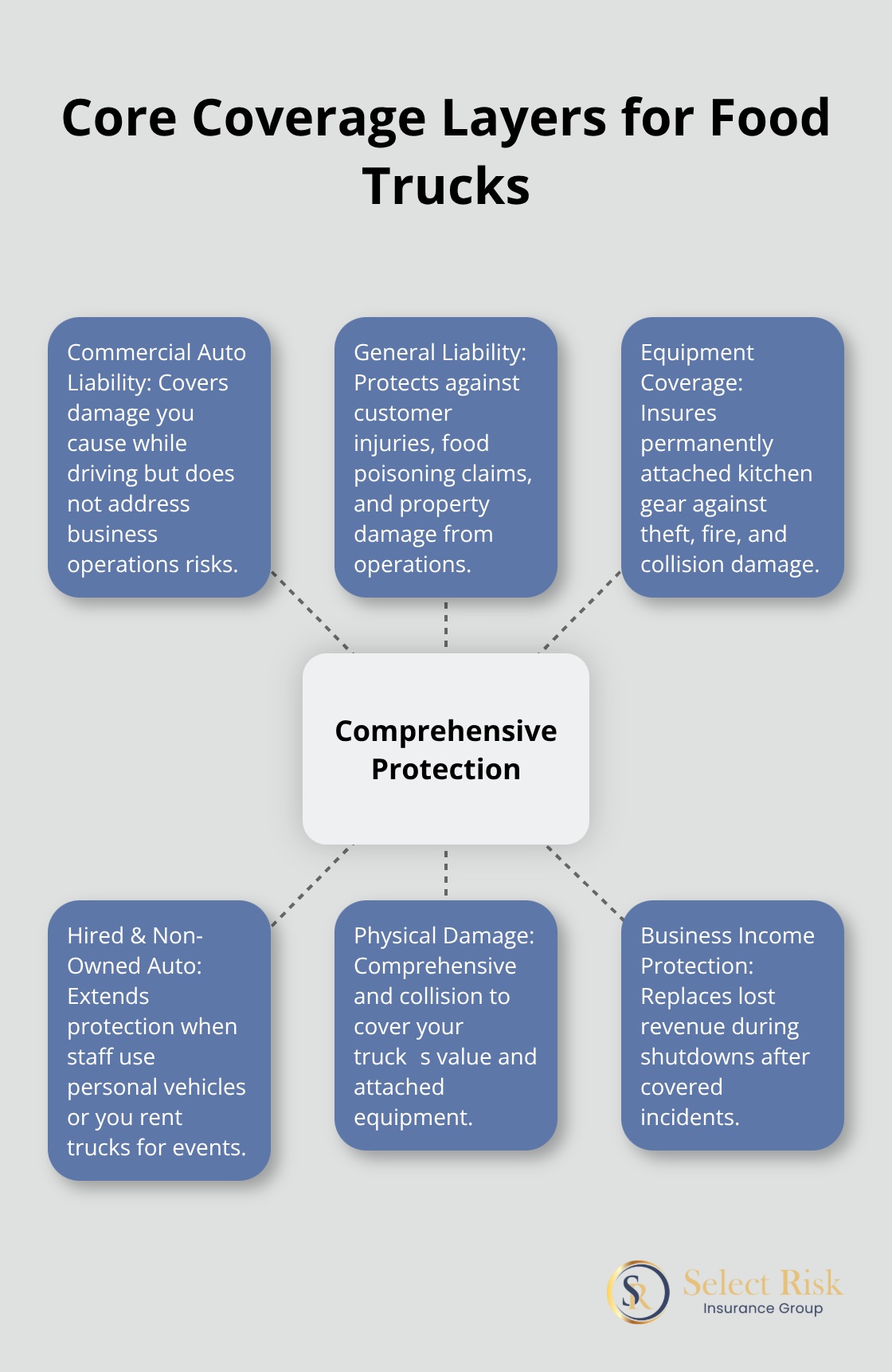
Commercial auto liability protection forms the backbone of your food truck insurance, but standard policies fall short of your actual needs. Your truck requires specialized coverage that protects against both vehicle accidents and business operations. Commercial auto liability covers damages you cause to other vehicles, property, and people while driving, but it stops there. Food trucks need commercial general liability that covers customer injuries, food poisoning claims, and property damage from your business operations. These two policies work together but cover completely different risk categories that both threaten your business daily.
Commercial Auto Liability Gaps You Must Fill
Standard commercial auto policies exclude coverage for permanently attached equipment like fryers, refrigerators, and point-of-sale systems. Your kitchen equipment gets zero protection under basic liability coverage. Equipment coverage costs an additional amount annually but protects against theft, fire, and collision damage to your specialized gear. Add hired and non-owned auto coverage to protect when employees drive personal vehicles for business errands or when you rent additional trucks for events.
Physical Damage Coverage for Your Vehicle
Comprehensive and collision coverage protects your truck’s value, but standard policies cap equipment coverage at limited amounts. Food truck operators need equipment floaters that cover full replacement costs for specialized kitchen gear. Physical damage premiums vary based on your truck’s value and equipment costs. Choose actual cash value coverage only if your truck exceeds 10 years old, otherwise replacement cost coverage prevents depreciation losses that can destroy your business finances.
Commercial General Liability for Business Operations
Commercial general liability covers the risks your auto policy ignores completely. Food poisoning claims can be costly, while slip-and-fall injuries near your truck also present financial risks. Your policy needs adequate aggregate coverage with product liability endorsements that cover foodborne illness claims. Add liquor liability if you serve alcohol, since standard policies exclude alcohol-related incidents entirely.
Understanding these coverage types helps you build a foundation, but the actual cost of your premiums depends on multiple factors that can either inflate or reduce your annual insurance expenses significantly.
Cost Factors and Ways to Save on Premiums
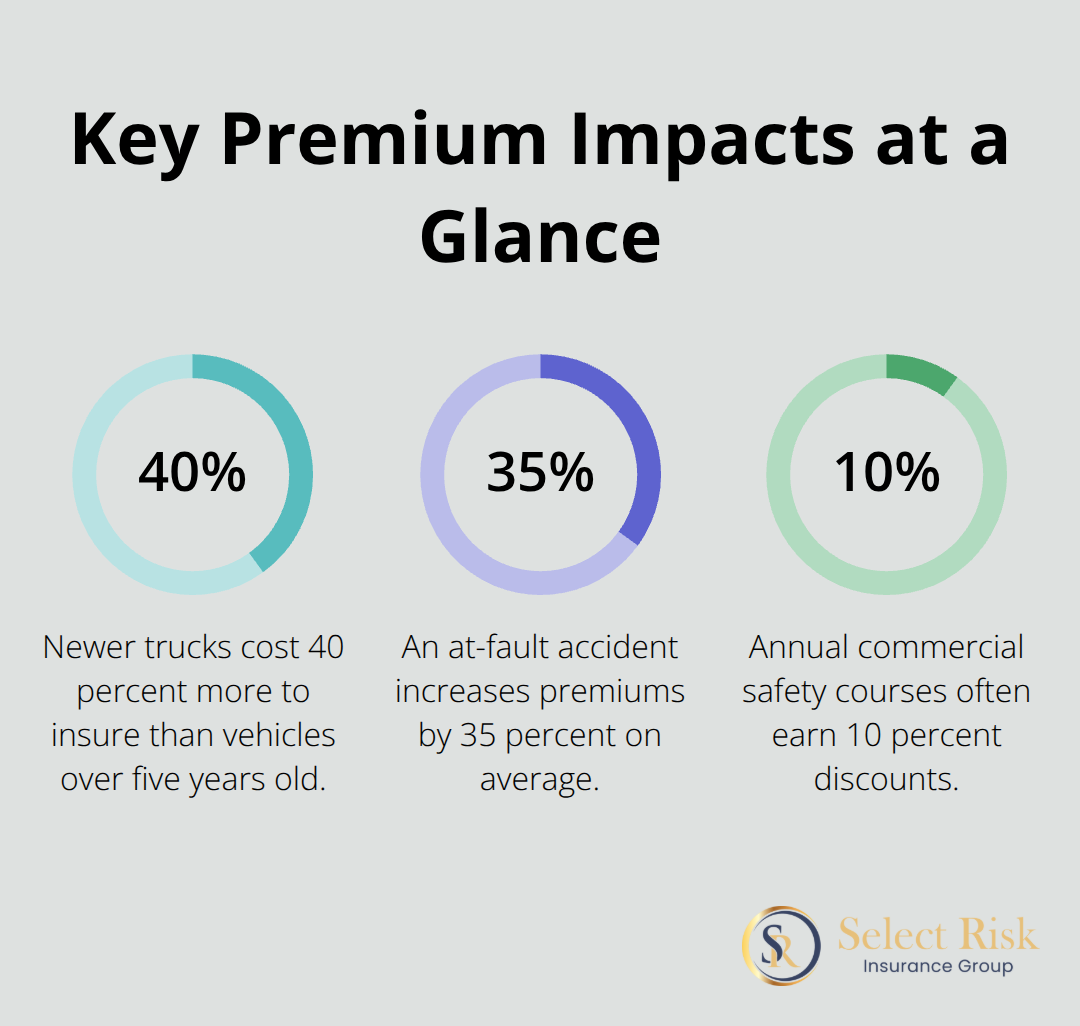
Food truck insurance premiums depend on specific factors that you can control to reduce your annual costs. Your truck’s value directly impacts premium calculations, with newer trucks costing 40 percent more to insure than vehicles over five years old according to industry data. Safety features like backup cameras, collision avoidance systems, and GPS tracking can reduce premiums by 15 to 25 percent through most carriers.
Anti-theft systems and secured overnight parking also qualify for discounts that compound over time.
Driver Records Determine Your Base Rates
Your driving record controls your base insurance rates more than any other factor. Commercial auto insurance is required by law in most states for food trucks operating on public roads. A single at-fault accident increases premiums by 35 percent on average. Multiple violations or DUI convictions can double your insurance costs or make coverage impossible to obtain. Require all drivers to complete commercial safety courses annually (many insurers reward this with 10 percent discounts). Background checks for new drivers prevent risks that inflate your premiums later.
Equipment Value Impacts Protection Costs
Equipment coverage adds approximately 12 to 18 percent to your base commercial auto premium but protects assets worth $15,000 to $50,000 in most food trucks. Choose scheduled equipment coverage that lists specific items rather than blanket coverage, which often excludes high-value items during claims. Business income protection costs an additional 8 percent of your total premium but replaces lost revenue when accidents shut down operations. This coverage pays for itself after just three days of forced closure.
Vehicle Age and Condition Affect Rates
Older trucks with higher mileage face increased premiums due to mechanical failure risks. Trucks over 10 years old may not qualify for comprehensive coverage through some carriers. Regular maintenance records can reduce premiums by demonstrating responsible ownership (insurers view this as lower risk). Commercial vehicle inspections that exceed DOT requirements also qualify for additional discounts with many providers.
Final Thoughts
Food truck success requires comprehensive commercial auto insurance for food truck operations that protects both vehicle risks and business liabilities. Your mobile business faces unique challenges that demand specialized protection beyond basic commercial auto policies. Federal DOT requirements, state minimums, and business-specific risks create complex insurance needs that generic policies cannot address.
Your investment in a food truck business deserves protection that matches its value and potential profits. Equipment coverage, business income protection, and adequate liability limits prevent financial disasters that could end your operation permanently. The average food truck represents a $75,000 to $200,000 investment when you include vehicle costs, equipment, and initial capital (making proper coverage essential for protecting this substantial investment).
Professional guidance makes the difference between adequate coverage and dangerous gaps that expose your business to catastrophic losses. We at Select Risk Insurance Group help food truck operators navigate these complex requirements while finding competitive rates. Contact us to build a customized policy that protects your specific operation and keeps your business moving forward.