Understanding Motor Truck General Liability Coverage

Motor truck liability insurance protects commercial trucking operations from third-party claims that standard auto policies can’t handle. The specialized coverage addresses unique risks truckers face daily.
We at Select Risk Insurance Group see how proper coverage prevents financial disasters when accidents occur. Understanding these protections helps trucking businesses make informed insurance decisions.
What Motor Truck General Liability Coverage Includes
Bodily Injury Protection for Third Parties
Motor truck general liability protects against injuries that happen during business operations outside of vehicle accidents. Insurance requirements vary depending on the entity type and operating authority, though industry experts recommend $1 million per occurrence and $2 million aggregate coverage.
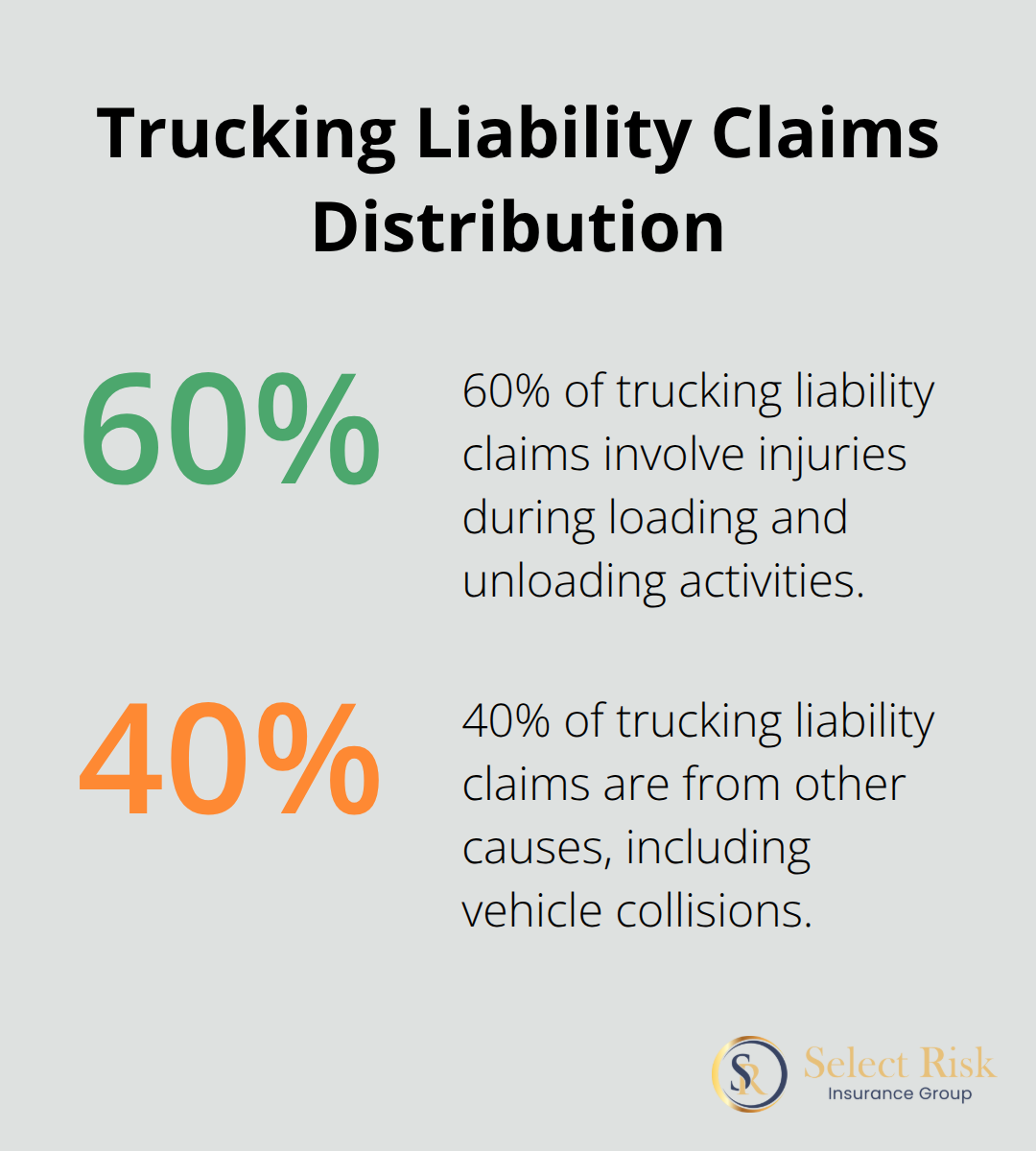
This protection kicks in when someone gets hurt during loading operations, slips on your truck at a delivery site, or suffers injuries from cargo that falls during unloading. Progressive Commercial reports that 60% of trucking liability claims involve injuries during loading and unloading activities rather than vehicle collisions.
Property Damage Coverage for Other Vehicles and Structures
Property damage protection covers structures, equipment, and other vehicles that suffer damage during non-driving business activities. Coverage includes damage to loading docks, warehouse equipment, and customer property during delivery operations.
Products-completed operations coverage protects against claims that arise from delivered goods causing damage after delivery. This applies when improperly secured freight falls and damages customer property weeks later (a common scenario that standard auto policies won’t cover).
Legal Defense Costs and Settlement Expenses
Legal defense costs represent a significant portion of claims, with average attorney fees ranging from $150,000 to $300,000 per lawsuit according to American Trucking Association data. The policy covers settlement expenses, court costs, and expert witness fees without reducing your coverage limits.
Medical payments coverage handles immediate medical expenses for injured third parties, typically ranging from $5,000 to $25,000 per person. This coverage helps prevent minor incidents from escalating into major lawsuits by addressing medical costs quickly.
These comprehensive protections differ significantly from standard commercial auto insurance in several important ways.
Key Differences from Standard Commercial Auto Insurance
Motor truck general liability operates with fundamentally different coverage structures than standard commercial auto insurance. Insurance requirements vary depending on the entity type and operating authority, but general liability policies typically start at $1 million per occurrence with $2 million aggregate limits. This higher threshold reflects the increased exposure trucking companies face beyond vehicle accidents.

Higher Coverage Limits for Commercial Operations
Standard commercial auto policies stop protection once the truck stops movement. Motor truck general liability takes over during stationary business activities like load operations, unload operations, and delivery tasks. Progressive Commercial data shows these activities generate 60% of trucking liability claims, yet auto policies provide zero coverage for these exposures.
Specialized Protection for Loading Activities
The policy covers injuries that occur on load docks, damage from dropped freight, and accidents during cargo handling operations that auto insurance explicitly excludes. These scenarios create substantial financial exposure (often exceeding $100,000 per incident) that auto coverage never addresses.
Coverage for Cargo-Related Third Party Claims
Products-completed operations coverage represents the most significant difference between these insurance types. Auto insurance never covers claims from delivered goods that cause damage after delivery completion. Motor truck general liability protects against lawsuits when improperly secured freight damages customer property days or weeks later.
This coverage extends to erroneous deliveries that cause business interruption losses, with typical settlements from $50,000 to $500,000 according to American Trucking Association claims data. The policy also covers advertising injury claims, including trademark infringement accusations that can cost trucking companies $25,000 to $100,000 in legal defense fees alone.
These coverage differences directly impact your premium costs, which vary based on several operational factors.
Factors That Affect Your Premium Costs
Premium calculations for motor truck general liability depend on three primary risk factors that insurers analyze with precision. Fleet composition creates the foundation for pricing, with insurance premiums at all-time highs according to Bureau of Labor Statistics data. Single-unit delivery trucks typically cost $1,200 to $2,400 annually, while semi-truck operations face $2,000 to $4,500 yearly premiums per unit. Fleet size multiplies these base rates through experience modification factors that reward larger operations with better loss ratios.

Vehicle Types and Fleet Size
Different truck types carry distinct risk profiles that directly impact your premiums. Straight trucks with gross vehicle weights under 26,000 pounds receive the lowest rates due to reduced damage potential. Class 8 tractor-trailers face the highest premiums because of their size and cargo capacity (often exceeding 80,000 pounds gross weight).
Fleet size affects your experience modification factor, which can reduce or increase base premiums by 25% to 40%. Operations with five or more trucks qualify for fleet discounts, while single-truck operators pay standard rates without volume benefits. Insurers track your loss history across all vehicles to calculate this modifier.
Driver Records and Experience Levels
Clean records reduce premiums by 15% to 25%, while recent accidents or violations increase costs dramatically. Drivers with CDL experience under two years face surcharges of 30% to 50% above standard rates. Insurance companies weight violations heavily, with speeding tickets adding $300 to $800 annually per violation.
DUI convictions trigger automatic declination from most carriers, forcing operators into high-risk markets with premiums exceeding $8,000 per truck. Companies that maintain driver safety programs through telematics monitoring achieve premium reductions of 10% to 20% with carriers like Progressive Commercial.
Geographic Routes and Cargo Types
Operating radius directly impacts premium calculations, with long-haul operations across multiple states costing 25% more than regional routes under 300 miles. Urban delivery routes in high-crime areas like Detroit or Chicago generate surcharges of 20% to 40% compared to rural operations.
Hazardous materials transport requires specialized endorsements costing $2,000 to $5,000 additional annually. High-value electronics or pharmaceuticals trigger cargo-specific liability concerns that increase general liability premiums by 15% to 30%. Refrigerated transport operations face additional mechanical breakdown exposures that push premiums 10% higher than dry van equivalents.
Final Thoughts
Motor truck liability coverage protects trucking operations from financial disasters that standard auto policies cannot address. The specialized protection covers bodily injury claims during loading operations, property damage from business activities, and legal defense costs that average $150,000 to $300,000 per lawsuit. Premium costs depend on vehicle types, driver records, and operating routes.
Single-unit trucks cost $1,200 to $2,400 annually, while semi-truck operations face $2,000 to $4,500 yearly premiums. Clean records reduce costs by 15% to 25%, while violations trigger substantial surcharges (often exceeding $800 per incident). Fleet size affects experience modification factors that can reduce or increase base premiums by 25% to 40%.
Commercial insurance agents prevent coverage gaps that destroy trucking businesses. We at Select Risk Insurance Group represent multiple carriers to provide comprehensive coverage throughout Louisiana. Review current coverage limits against industry standards of $1 million per occurrence and $2 million aggregate, then request quotes from multiple carriers.