Is Plumbing Business Insurance Required in Louisiana?
Running a plumbing business in Louisiana means navigating specific insurance requirements that protect both your company and your clients. Plumbing business insurance Louisiana isn’t optional-it’s a legal mandate backed by state regulations.
At Select Risk Insurance Group, we’ve helped countless plumbers understand what coverage they actually need. Without the right policies in place, you’re exposing your business to serious financial and legal risks.
What Louisiana Plumbing Licenses Require for Insurance
The Board’s Three Non-Negotiable Coverage Mandates
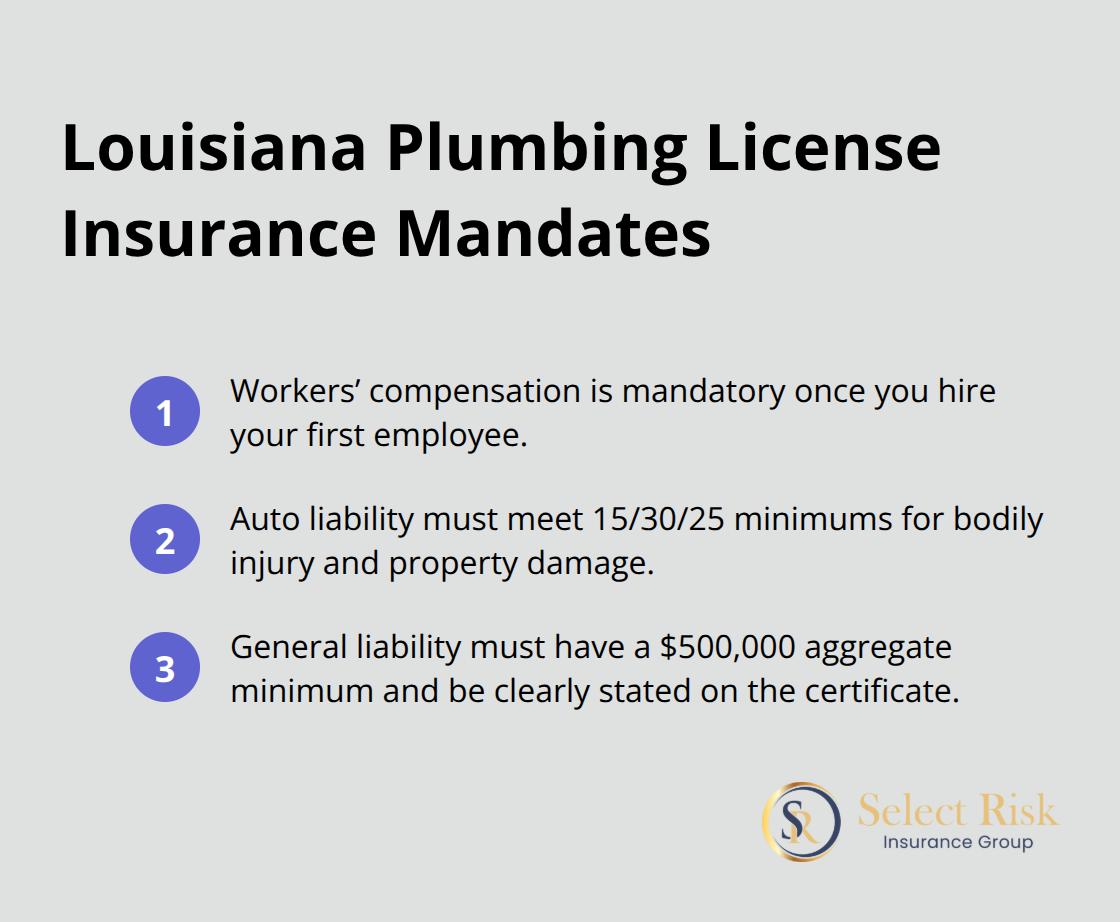
Louisiana’s State Plumbing Board ties insurance requirements directly to your master plumber license. If you hold an active master plumber license, the board demands proof that your employing entity maintains three specific coverages before you can renew or activate your license. Workers’ compensation insurance comes first-Louisiana law mandates it the moment you hire your first employee. Motor vehicle bodily injury and property damage liability insurance comes second, with minimum amounts required by state law: 15/30/25 coverage ($15,000 per person, $30,000 per accident for bodily injury, and $25,000 for property damage). Comprehensive general liability and property damage insurance with a minimum aggregate of $500,000 comes third.
Without proof of all three coverages from an insurer authorized to do business in Louisiana, the board will not issue, renew, or revive your master license. Plumbers often lose renewal deadlines because they underestimate these thresholds or fail to coordinate coverage with their employing entity ahead of time.
The $500,000 General Liability Floor Sets a Real Standard
That $500,000 aggregate for general liability coverage carries serious weight. Most startup plumbing operations dramatically underestimate what happens when a burst pipe floods a customer’s kitchen, causes mold damage, or leads to structural issues. One water damage claim can easily reach $50,000 to $100,000 in property restoration costs, and if the property owner pursues a personal injury claim tied to mold exposure, your liability exposure multiplies. The board set this minimum because plumbing work carries genuine risk. You cannot operate legally with less. Your insurance certificate must explicitly state that $500,000 aggregate, and the certificate must include a termination date. Louisiana’s board will not accept continuous or until-canceled coverage unless it applies to the current license year only. When you renew each December 31, your certificate must show a new termination date going forward. Many plumbers miss this detail and face license suspension during renewal season.
Workers’ Compensation Applies to Every Hired Employee
Workers’ compensation becomes mandatory the instant you hire your first employee, and Louisiana has no exemptions for small plumbing operations. If you operate as a sole proprietor with no employees, you may qualify for an exemption-but you must file a notarized Affidavit of Workers’ Compensation with the board. This affidavit expires December 31 of your license year, and you must submit a new one at each renewal or whenever your employment status changes. The board takes this seriously because the affidavit protects both you and the state from claims of unpaid worker benefits.
Vehicle Coverage Documentation Matters
For commercial auto coverage, you can submit either a separate vehicle liability certificate or a copy of your vehicle liability insurance card for each service vehicle. Either way, the board’s office needs proof before your license moves forward. The state doesn’t care which format you use; it cares that coverage exists and is documented. This flexibility allows you to streamline your paperwork without sacrificing compliance.
Moving Forward With Compliance
Understanding these four requirements-workers’ compensation, vehicle liability, general liability, and the $500,000 aggregate threshold-positions you to maintain your license without interruption. The next step involves identifying which specific coverage types actually protect your plumbing business from the risks you face on every job.
Coverage Your Louisiana Plumbing Business Actually Needs
General Liability Insurance Protects Against Property Damage Claims
General liability insurance covers you when your work damages a customer’s property or causes bodily injury. A single water damage claim from a burst pipe reaches $50,000 to $100,000 in restoration costs, and general liability covers those expenses, legal defense, and settlements. The Louisiana State Plumbing Board mandates a $500,000 aggregate minimum because plumbing work carries genuine risk. Your policy must explicitly state that aggregate limit and include a termination date on the certificate. Underestimating this coverage leaves you exposed to catastrophic financial loss on even routine jobs.
Workers’ Compensation Covers Employee Injuries and Medical Costs
Workers’ compensation insurance covers medical expenses, lost wages, and death benefits when an employee gets injured on the job. Louisiana law requires this coverage the moment you hire your first employee, with no exemptions for small operations. If you operate solo with no employees, file a notarized Affidavit of Workers’ Compensation instead, which expires December 31 annually. This requirement protects both your workers and your business from claims of unpaid benefits.
Commercial Auto Insurance Protects Your Service Vehicles
Commercial auto insurance is mandatory for any service vehicle your business operates. Louisiana’s state minimum is 15/30/25 coverage ($15,000 per person, $30,000 per accident for bodily injury, and $25,000 for property damage), but many plumbers carry higher limits because a single vehicle accident can exceed state minimums. Your certificate must cover each service vehicle, and you can submit either a separate certificate or a copy of your vehicle insurance card to the board. This flexibility streamlines your paperwork without sacrificing compliance.
Tools, Equipment, and Property Coverage Protect Your Assets
Tools and equipment coverage protects expensive plumbing gear from theft or damage, which matters more than most plumbers realize. A drain camera costs $2,000 to $5,000, pipe wrenches and specialty tools add up quickly, and theft from job sites or vehicles happens regularly. This coverage is optional but practical if your equipment inventory exceeds $10,000.
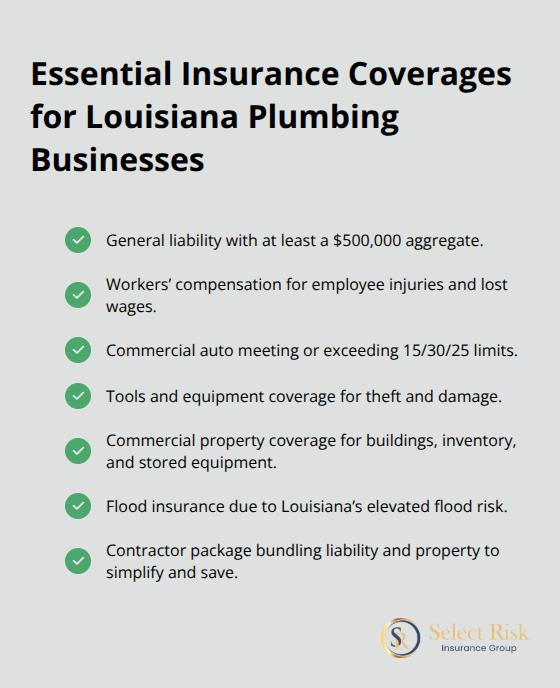
Commercial property insurance covers your physical business location, inventory, and equipment stored at your facility from perils like fire and wind. Many plumbing businesses overlook this until a warehouse fire destroys thousands in parts and tools. Louisiana’s flood risk makes flood insurance a serious consideration as well, since standard property policies exclude water damage from flooding. A contractor insurance package bundles general liability and property coverage into one cost-efficient solution, which many plumbing startups use to simplify administration and reduce premiums compared to purchasing policies separately.
Matching Coverage to Your Actual Business Operations
Base your coverage decisions on your actual project scope and equipment value rather than industry minimums, because underinsuring creates gaps that no policy will cover. Review your equipment and property values annually because replacement costs typically exceed what plumbers initially estimate. As your business grows and your project values increase, your coverage needs shift as well-which means your insurance strategy must adapt alongside your operations.
What Happens When Plumbers Skip Insurance Coverage
License Suspension Stops Your Business Immediately
Operating without proper insurance in Louisiana isn’t just risky-it’s illegal and stops your business cold. The Louisiana State Plumbing Board won’t renew or issue your master license without proof of the $500,000 general liability aggregate, which means you cannot legally work at all. Most plumbers who attempt to operate uninsured do so because they underestimate how quickly costs escalate on real jobs. A water damage incident that seems minor-a small leak during a fixture replacement-often triggers mold remediation, structural damage assessment, and temporary housing expenses for the property owner. When the homeowner files a claim against you personally because you lack coverage, your personal assets become fair game. Courts can garnish wages, place liens on your home, and seize business equipment to satisfy judgments. Louisiana plumbers have faced six-figure judgments from single incidents, and those judgments follow them for years. The board’s minimum exists because plumbing work creates genuine exposure that cheaper coverage simply cannot address.
Property Damage Claims Exceed What Most Plumbers Expect
A single property damage claim from a burst pipe can exceed $100,000 in restoration costs, and without general liability coverage, you’re personally liable for every dollar. The damage extends far beyond the initial water leak. Mold remediation alone costs $2,000 to $6,000 per room, structural repairs run $5,000 to $25,000, and temporary housing for displaced families adds thousands more. Without insurance, you absorb all of it. Your personal bank account, your home equity, and your business assets all become targets for collection. One incident destroys most small plumbing operations because owners lack the financial reserves to cover six-figure liability exposure.
Employee Injuries Create Staggering Medical and Legal Costs
Medical expenses from employee injuries multiply fast when workers’ compensation is absent. A plumber hospitalized for a fall from a ladder faces surgical costs ($15,000–$50,000), ongoing physical therapy ($5,000–$15,000), and lost wages during recovery. Without workers’ compensation, you’re liable for all of it plus potential penalties from the Louisiana Workforce Commission. The state imposes fines up to $1,000 per day for operating without required coverage, and the board suspends your license immediately upon discovery. Your employee can also sue you directly for negligence, which creates additional legal exposure beyond the medical bills themselves.
Legal Defense Costs Drain Resources Faster Than Claims Themselves
Legal costs from defending an uninsured operation drain resources that most small plumbing businesses cannot absorb. If an employee sues you directly for negligence or unsafe working conditions, your defense attorney charges $200–$400 per hour, and depositions, expert witnesses, and court appearances easily exceed $10,000 before trial even begins. Uninsured plumbers often settle claims far above what insurance would have paid because they lack the resources to mount a proper legal defense. The combination of license suspension, fines, personal liability, and legal fees destroys businesses faster than any market downturn.
The Cascade of Consequences Collapses Operations Within Months
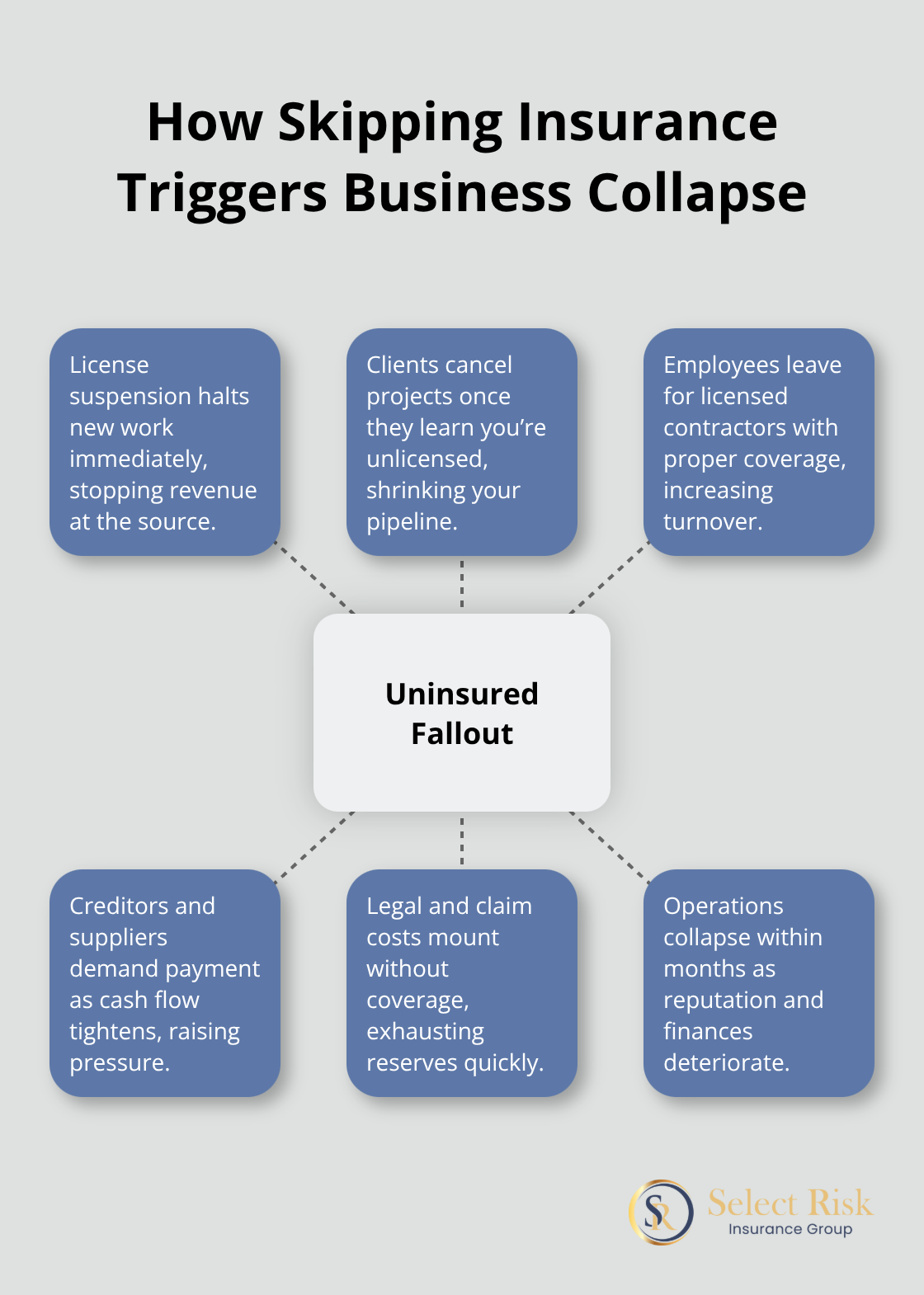
A single uninsured incident triggers multiple financial and legal consequences that compound rapidly. Your license suspension prevents you from accepting new work. Existing clients cancel projects when they learn you’re unlicensed. Employees leave for jobs with licensed contractors who carry proper coverage. Creditors and suppliers demand payment while your revenue stops. Within months, most uninsured plumbing operations collapse entirely. The financial damage extends beyond the initial claim-it destroys your ability to operate, your reputation in the market, and your employees’ trust in your business.
Final Thoughts
Louisiana plumbing business insurance Louisiana isn’t optional-it’s the legal requirement that keeps your operation running and protects your personal assets from catastrophic loss. The State Plumbing Board demands proof of workers’ compensation, vehicle liability, and a $500,000 general liability aggregate before you renew or activate your master license, and these minimums exist because plumbing work creates real financial exposure. A single water damage claim reaches $50,000 to $100,000 in restoration costs, an employee injury generates medical bills and legal action, and without proper coverage, you absorb every dollar personally.
The right insurance strategy shields your personal assets when your work damages a customer’s property, protects your employees from workplace injury costs, covers accidents involving your service vehicles, and safeguards expensive tools and equipment from theft or damage. These policies allow you to operate confidently, bid on larger projects, and grow your business without fear that one incident will destroy everything you’ve built. Working with an agency that understands plumbing-specific risks and Louisiana’s regulatory landscape makes the difference between compliance that protects you and coverage that leaves gaps.
We at Select Risk Insurance Group represent multiple financially sound insurance companies, which allows us to shop competitive rates and find coverage that matches your actual business needs. Our team handles the compliance details-certificate termination dates, aggregate limits, vehicle documentation-so you focus on running your operation. Contact Select Risk Insurance Group today to review your current coverage or get started with a comprehensive insurance strategy tailored to your plumbing business.