What Does Business Insurance Cover?

Business owners face countless risks that could devastate their operations overnight. From lawsuits to natural disasters, the threats are real and expensive.
We at Select Risk Insurance Group see businesses struggle with understanding what does business insurance cover and which policies they actually need. The right coverage protects your assets, employees, and future growth from unexpected financial losses.
Which Business Insurance Types Matter Most
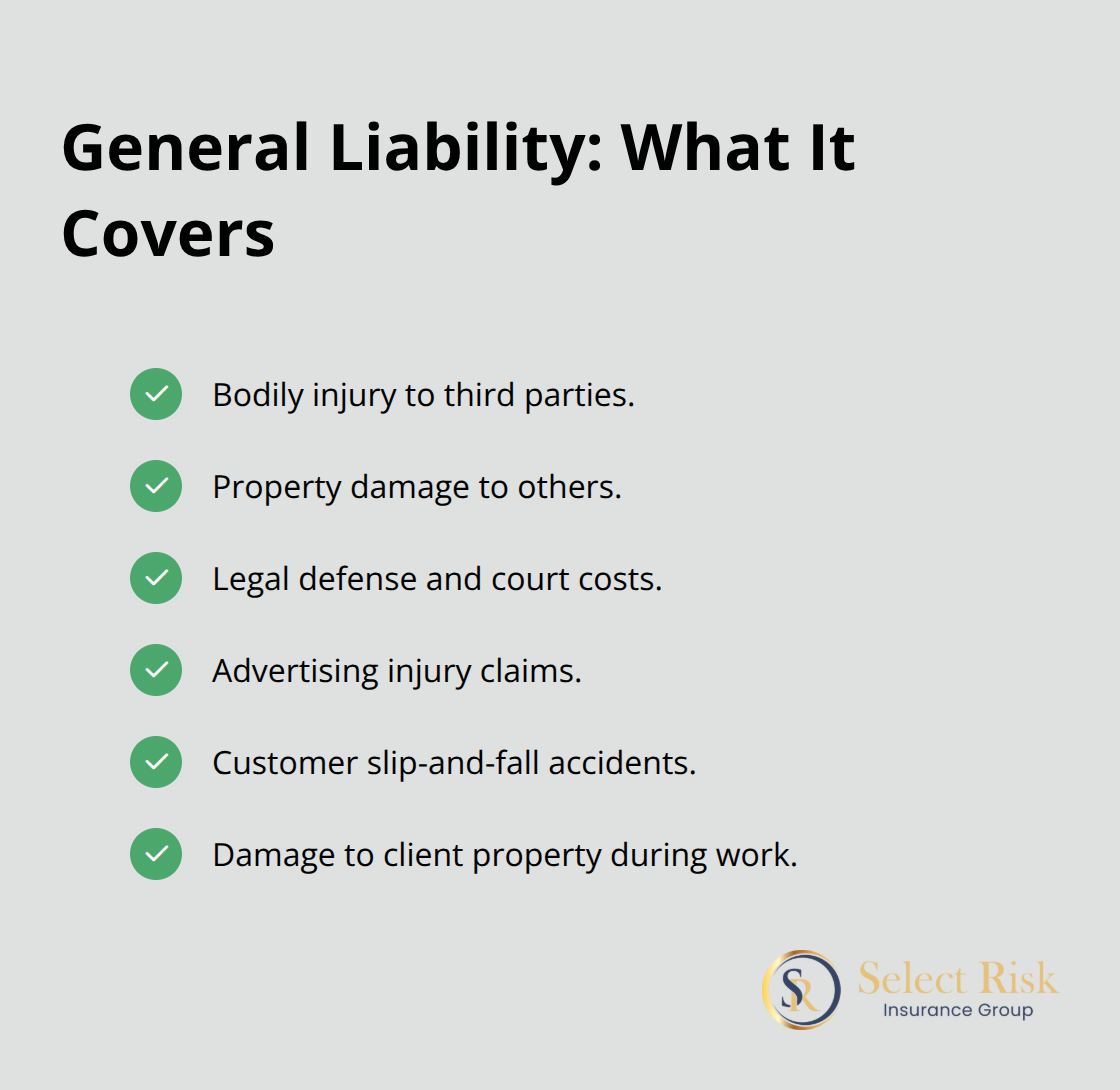
General liability insurance serves as the foundation of business protection, covering third-party claims for bodily injury, property damage, and legal fees. Small businesses pay approximately $42 monthly according to Insureon data, which makes this coverage accessible for most operations. This policy handles customer slip-and-fall accidents, damaged client property, and advertising injury lawsuits that could otherwise bankrupt your company.
Property Insurance Protects Your Physical Investment
Commercial property insurance covers buildings, equipment, inventory, and furniture against fire, theft, vandalism, and weather damage. Manufacturing businesses face higher premiums due to expensive machinery, while office-based companies pay less for basic equipment coverage. Most policies exclude flood damage (requiring separate flood insurance in high-risk areas). The average claim reaches $43,000 according to industry data, making adequate coverage limits essential for recovery.
Workers Compensation Laws Demand Compliance
Workers compensation insurance requirements vary by state once you hire employees. This coverage pays medical expenses and lost wages for work-related injuries, protecting both employees and employers from costly lawsuits. Rates vary significantly by industry – construction companies pay $8.40 per $100 of payroll while office workers cost only $0.75 per $100. Failure to carry required coverage results in fines, penalties, and personal liability for all workplace injuries. Even businesses with one employee must comply with state mandates to avoid legal consequences.
Professional Liability Shields Service Providers
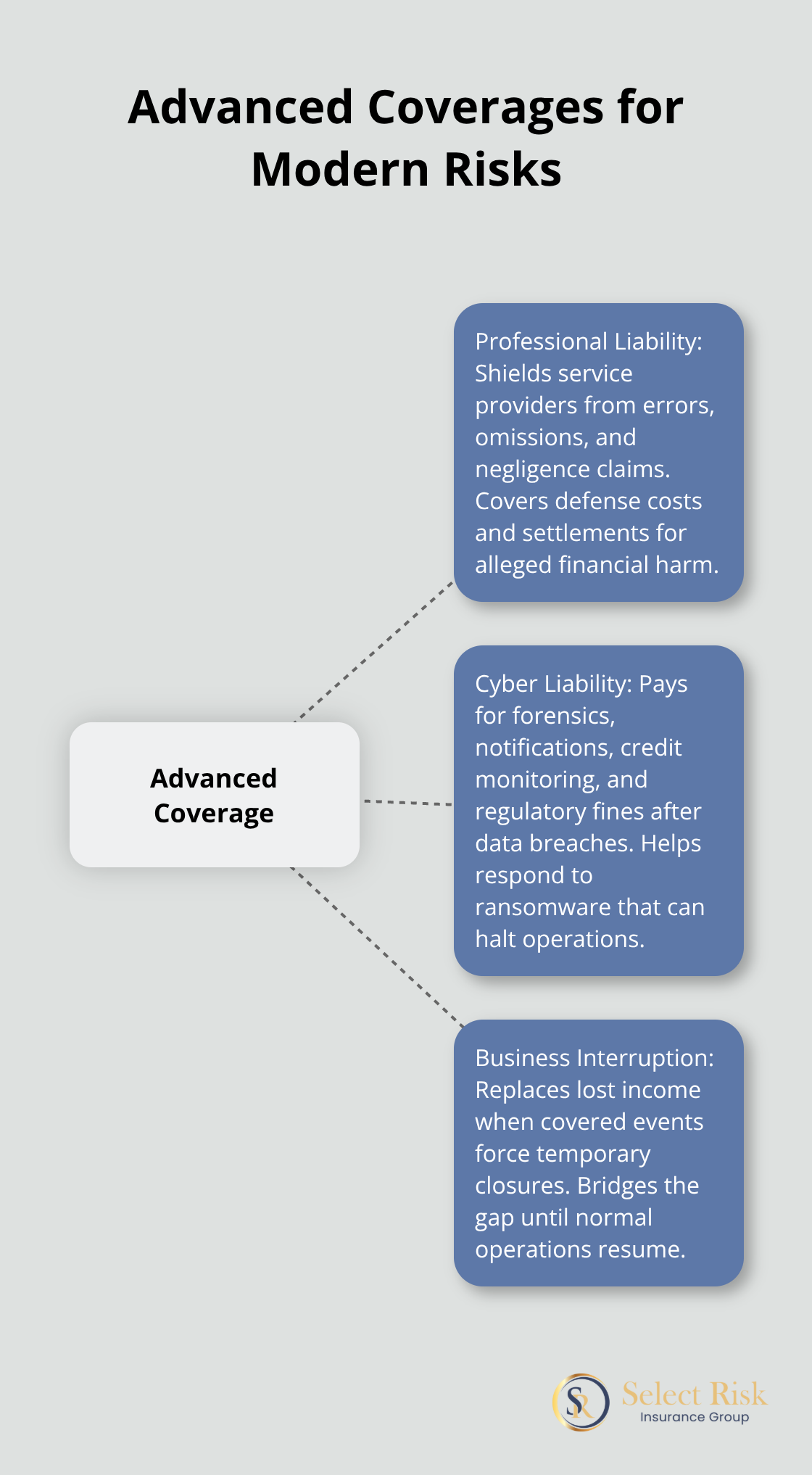
Professional liability insurance protects service-based businesses from claims of errors, omissions, or negligence in their professional work. Consultants, accountants, and healthcare providers face particular exposure to malpractice lawsuits that can reach millions in damages. This coverage handles legal defense costs and settlements when clients claim your advice or services caused financial harm. The protection extends beyond basic general liability to cover the specific risks that come with professional expertise and recommendations.
These foundational coverage types address immediate operational risks, but modern businesses face additional threats that require specialized protection strategies.
What Advanced Coverage Protects Modern Businesses
Professional Liability Guards Service Providers
Professional liability insurance protects service-based businesses where advice and expertise create financial exposure. This coverage shields against errors and omissions claims that general liability policies exclude completely. Accounting firms face average premiums of $1,200 annually while technology consultants pay around $2,000 (according to industry data from Insureon). The coverage handles legal defense costs and settlements when clients claim your professional services caused financial losses. Real estate agents, consultants, and healthcare providers face particular vulnerability since their recommendations directly impact client financial decisions.
Cyber Liability Addresses Digital Threats
Cyber liability insurance addresses the fastest-growing business threat as data breaches create significant financial exposure for organizations of all sizes. This protection covers forensic investigations, customer notification costs, credit monitoring services, and regulatory fines that follow data compromises. Technology companies face higher premiums due to extensive data handling while traditional businesses pay less but still need protection against ransomware attacks that can cripple operations overnight.
Business Interruption Prevents Financial Collapse
Business interruption coverage compensates for lost income when covered events force temporary closure – the average claim reaches $85,000 and can save businesses from bankruptcy during extended shutdowns. Manufacturing operations typically pay higher premiums due to complex supply chains while service businesses face lower costs but still need protection against system failures that halt operations. This coverage bridges the gap between when disaster strikes and when normal operations resume.
Understanding these advanced protections helps businesses prepare for modern risks, but the actual cost of coverage depends on several specific factors that vary dramatically between companies.
What Drives Your Business Insurance Costs
Insurance premiums vary dramatically based on industry risk profiles, with construction companies paying $8.40 per $100 of payroll for workers compensation while office workers cost only $0.75 per $100 according to industry data. Your claims history directly impacts rates – businesses with previous claims face premium increases of 20-50% at renewal, while clean records qualify for preferred rates and discounts. Manufacturing operations typically pay 3-4 times more for general liability coverage than service-based businesses due to higher injury risks and equipment exposures.

Revenue Size Scales Premium Costs
Business revenue directly correlates with insurance costs since higher sales volumes increase liability exposure and potential claim amounts. Companies that generate $500,000 annually pay approximately $1,200 for general liability coverage while $2 million revenue businesses face $3,000+ premiums (according to Insureon data). Employee count multiplies workers compensation costs significantly – each additional worker increases annual premiums by $400-800 based on job classification.
Location Affects Risk Assessment
Geographic location affects rates substantially, with businesses in hurricane-prone Louisiana paying 45% more for property coverage than companies in low-risk Midwest locations. Coastal areas face higher premiums due to weather exposure while urban locations cost more than rural areas because of increased theft and liability risks. States with higher lawsuit frequencies also drive up professional liability and general liability rates across all business types.
Coverage Limits Impact Total Costs
Coverage limit selection dramatically impacts costs, with $2 million liability policies costing double the price of $1 million limits, but the additional protection often justifies the expense when facing today’s lawsuit settlements. Higher deductibles reduce premiums by 15-25% but increase out-of-pocket costs when claims occur. Businesses must balance premium savings against potential financial exposure when selecting coverage amounts and deductible levels.
Final Thoughts
Every business needs general liability insurance as the foundation, followed by property coverage for physical assets and workers compensation when employees join your team. Professional liability protection becomes essential for service providers, while cyber insurance addresses modern digital threats that affect companies across all industries. The complexity of modern business risks requires expert guidance to identify coverage gaps and select appropriate limits.
Premium costs vary significantly based on industry, location, and business size (making professional assessment valuable for optimization of both protection and budget). We at Select Risk Insurance Group work with multiple reputable carriers to provide personalized solutions that match your specific needs and budget constraints. Our independent agency approach allows us to compare options across different insurers for Louisiana businesses.
Start by evaluation of your current exposures and identification of potential risks that could impact operations. Contact licensed insurance professionals who understand your industry requirements and can recommend appropriate coverage combinations. Review your policies annually as your business grows and evolves to maintain adequate protection against what does business insurance cover for emerging threats.