How to Implement Effective Safety Programs for Lower Premiums

Workplace injuries cost U.S. businesses over $170 billion annually, with insurance premiums rising alongside incident rates. Companies implementing comprehensive safety programs see average premium reductions of 15-30%.
We at Select Risk Insurance Group have observed that businesses with robust truck safety programs and workplace protocols consistently achieve lower insurance costs. The right safety framework transforms your risk profile while protecting your bottom line.
Key Components of Effective Safety Programs
Effective safety programs start with systematic hazard identification that goes beyond basic OSHA requirements. Companies that conduct regular workplace inspections can benchmark their performance against national industry standards to identify areas for improvement. The most successful programs map every potential risk point in operations, from slip hazards in break rooms to equipment failure patterns in production areas. This granular approach identifies problems before they become claims.
Risk Assessment That Prevents Claims
Smart companies analyze their claims history to target high-risk areas rather than apply generic safety measures. Businesses that focus safety efforts on their top three claim categories see better results than those that spread resources thin. Manufacturing facilities often find that the majority of their incidents occur in a small percentage of their workspace. This data drives targeted interventions where they matter most.
Job-Specific Training Programs
Generic safety training fails because workers forget abstract concepts within weeks. Companies that implement job-specific training programs see fewer workers compensation claims within the first year. Effective training focuses on actual workplace scenarios rather than theoretical situations. Warehouse workers learn proper lifting techniques with their actual equipment and loads, not classroom presentations. Monthly micro-training sessions that last 10-15 minutes maintain safety awareness better than annual marathons.
Documentation and Accountability Systems
Written safety policies mean nothing without enforcement mechanisms and regular updates. Successful programs establish clear accountability chains where supervisors conduct daily safety checks and document findings. Companies that use digital safety management systems report faster incident response times compared to paper-based tracking. These systems capture near-miss events that paper logs often overlook.
Performance Monitoring and Metrics
The most effective programs tie safety performance directly to management bonuses and promotion criteria. Monthly safety audits should focus on high-risk areas identified through claims history rather than generic checklists. Companies track training completion rates against incident data to identify which approaches work best for their workforce. This data-driven approach sets the foundation for understanding how these programs directly impact your insurance costs.
How Safety Programs Reduce Insurance Costs
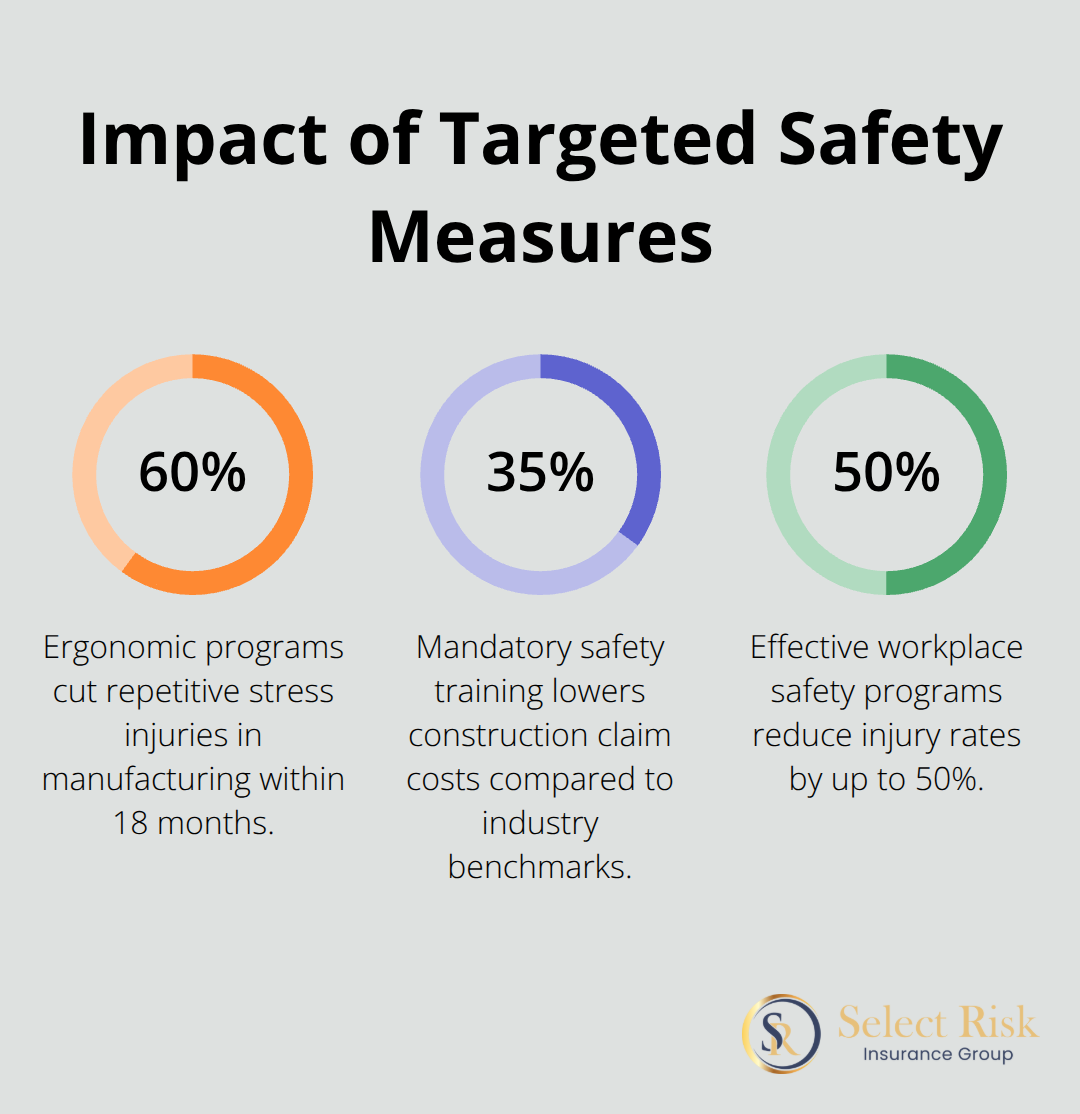
Safety programs directly impact your insurance costs through measurable reductions in claims frequency and severity. Companies with comprehensive safety programs achieve average workers compensation premium reductions of 25-40% within three years of implementation. The National Safety Council reports that effective workplace safety programs reduce injury rates by up to 50%, which translates to substantial premium savings.
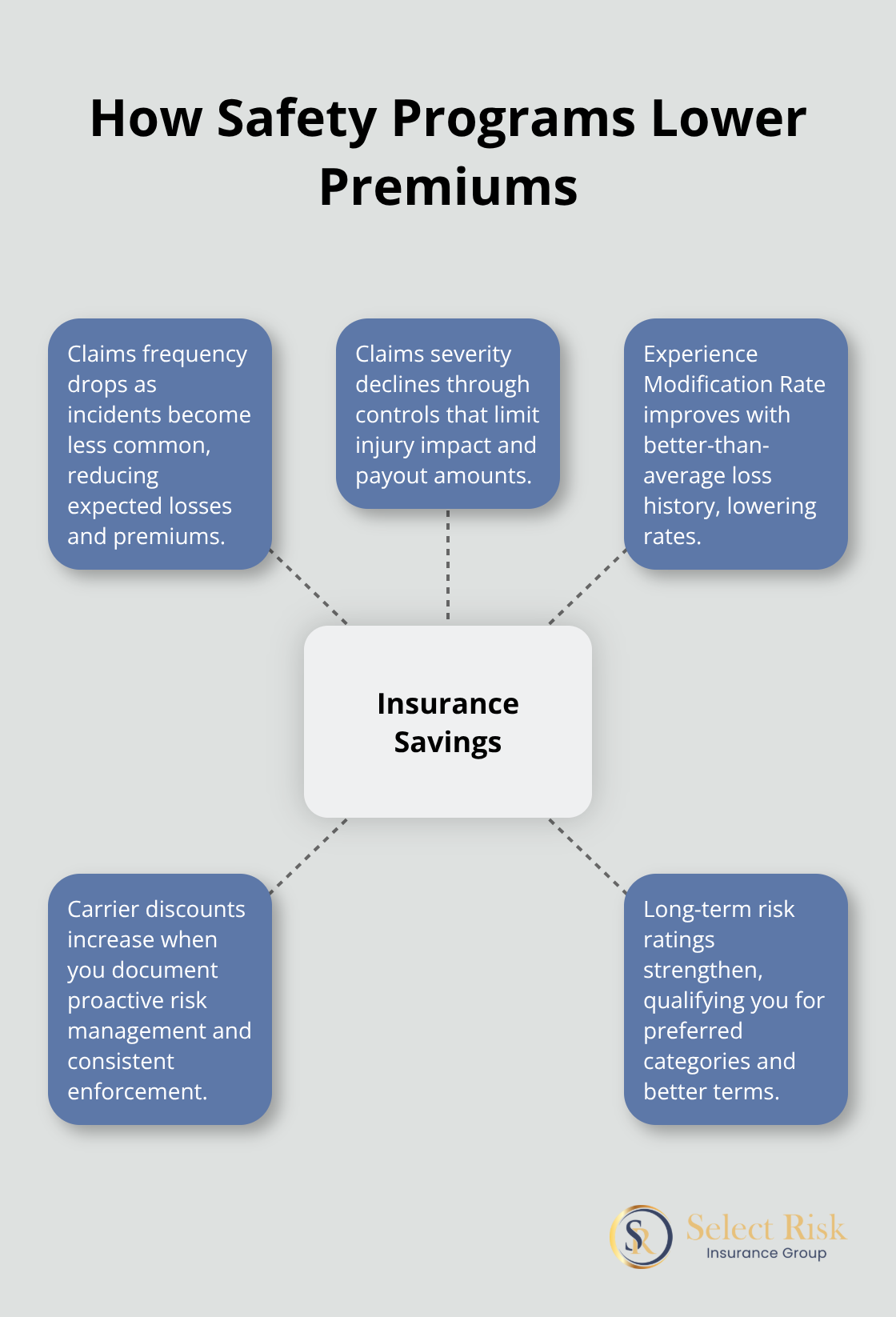
Insurance carriers calculate premiums based on your Experience Modification Rate, which reflects your claims history compared to similar businesses. A single severe workplace injury can increase your EMR and premiums for up to three years, making prevention far more cost-effective than reactive measures.
Direct Premium Reductions Through Claims Prevention
Workers compensation premiums decrease immediately when claim frequencies drop below industry averages. Manufacturing companies that implement ergonomic programs see 60% fewer repetitive stress injuries within 18 months. Construction firms that use mandatory safety training report 35% lower claim costs compared to industry benchmarks.
General liability exposure drops significantly when businesses address slip-and-fall hazards, equipment maintenance issues, and customer safety protocols. Insurance carriers offer premium discounts of 5-15% for companies that demonstrate proactive risk management through documented safety programs, regular training records, and consistent policy enforcement.
Long-Term Financial Impact on Risk Ratings
Insurance companies reward businesses with strong safety records through preferential pricing and coverage terms. Companies that maintain three consecutive years without significant claims qualify for preferred risk categories that offer 20-30% lower base premiums. Your loss history directly influences renewal rates, with clean safety records providing leverage during policy negotiations. Businesses that invest $1 in comprehensive safety programs typically save $4-6 in insurance costs over five years (according to OSHA data). This return on investment accelerates as your risk profile improves and you access better insurance markets with more competitive pricing structures.
Insurance Carrier Incentives and Discounts
Many insurance carriers provide additional incentives beyond standard premium calculations for companies with proven safety records. These incentives include dividend programs that return portions of premiums to low-claim businesses and multi-year rate guarantees for companies with exceptional safety performance. Some carriers offer specialized coverage enhancements at no additional cost for businesses that meet specific safety benchmarks. The combination of lower base premiums and carrier incentives creates compound savings that grow over time as your safety program matures and demonstrates consistent results.
Best Practices for Safety Program Implementation
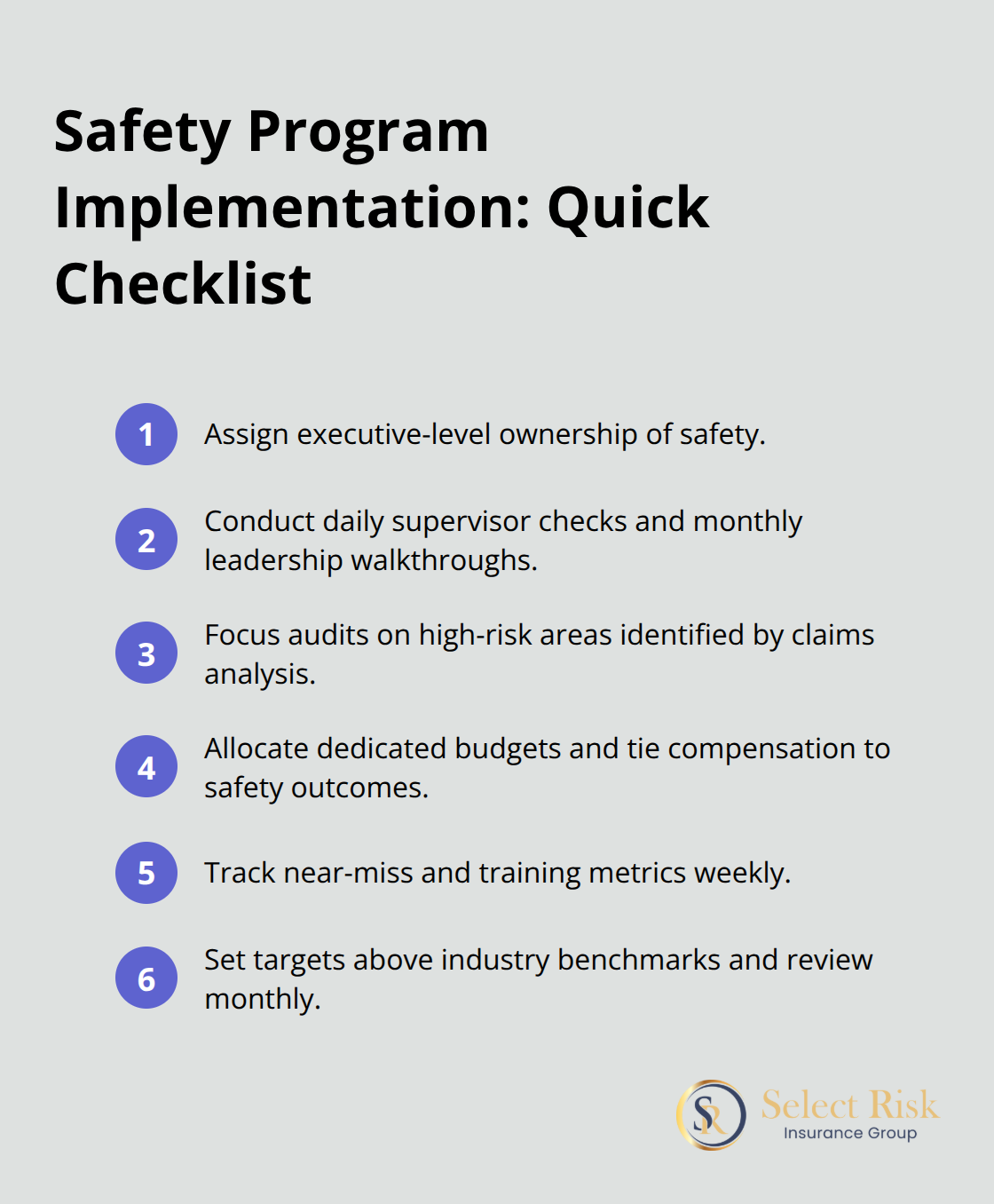
Successful safety program implementation requires visible management commitment paired with measurable performance tracking systems. Companies that assign safety responsibilities to senior executives see better compliance rates compared to those where safety falls to middle management. The most effective approach combines daily supervisor safety checks with monthly leadership walkthroughs that focus on high-risk areas identified through claims analysis. Management must allocate specific budget percentages to safety initiatives and tie safety performance directly to executive compensation structures.
Executive Leadership Sets the Standard
Safety programs fail when executives delegate responsibility without active involvement in daily operations. Companies where CEOs conduct quarterly safety meetings with frontline workers achieve better injury rates than industry averages, considering that workplace fatalities reached 3.5 per 100,000 full-time equivalent workers in 2023. Effective leaders establish safety as a core business metric alongside revenue and profitability targets. Weekly safety reports should go directly to executive leadership with specific action items and deadlines for hazard correction. Management commitment becomes visible through immediate response to safety concerns and consistent enforcement of safety policies across all employee levels.
Performance Metrics Drive Results
Smart companies track indicators like near-miss reports and safety completion rates rather than wait for actual injuries to occur. Businesses that monitor safety metrics weekly instead of monthly identify problems faster and prevent more serious incidents. Effective systems capture data on effectiveness by measurement of incident rates before and after specific programs. Companies should establish safety performance targets that exceed industry benchmarks and review progress monthly with specific corrective actions for missed targets.
Employee Accountability Creates Culture Change
The most successful programs tie individual performance reviews to safety metrics and reward employees who identify potential hazards before they cause incidents. Workers who participate in safety committees report hazards more frequently than those without formal involvement. Companies that implement peer-to-peer safety observations see fewer violations compared to supervisor-only monitoring systems. Safety accountability works best when employees understand how their actions directly impact team safety and company insurance costs (rather than abstract safety concepts).
Final Thoughts
Comprehensive safety programs deliver measurable premium reductions of 25-40% within three years while they protect your workforce and business operations. Companies that invest $1 in safety programs typically save $4-6 in insurance costs over five years. Additional benefits include improved employee morale, reduced operational disruptions, and enhanced business reputation.
Your safety program requires three immediate actions: conduct a thorough risk assessment of your current operations, establish clear safety policies with accountability measures, and implement regular training programs tailored to your specific workplace hazards. Focus initial efforts on your top three claim categories rather than spread resources across generic safety measures. This targeted approach produces faster results and better return on investment.
Truck safety programs and comprehensive workplace protocols create value beyond immediate premium savings (through reduced liability exposure, improved risk ratings, and access to preferred insurance markets). Your investment builds a foundation for sustainable business growth. We at Select Risk Insurance Group help businesses develop customized safety strategies that align with their specific needs and maximize insurance savings potential through expert guidance and support.